Monday, January 28, 2013

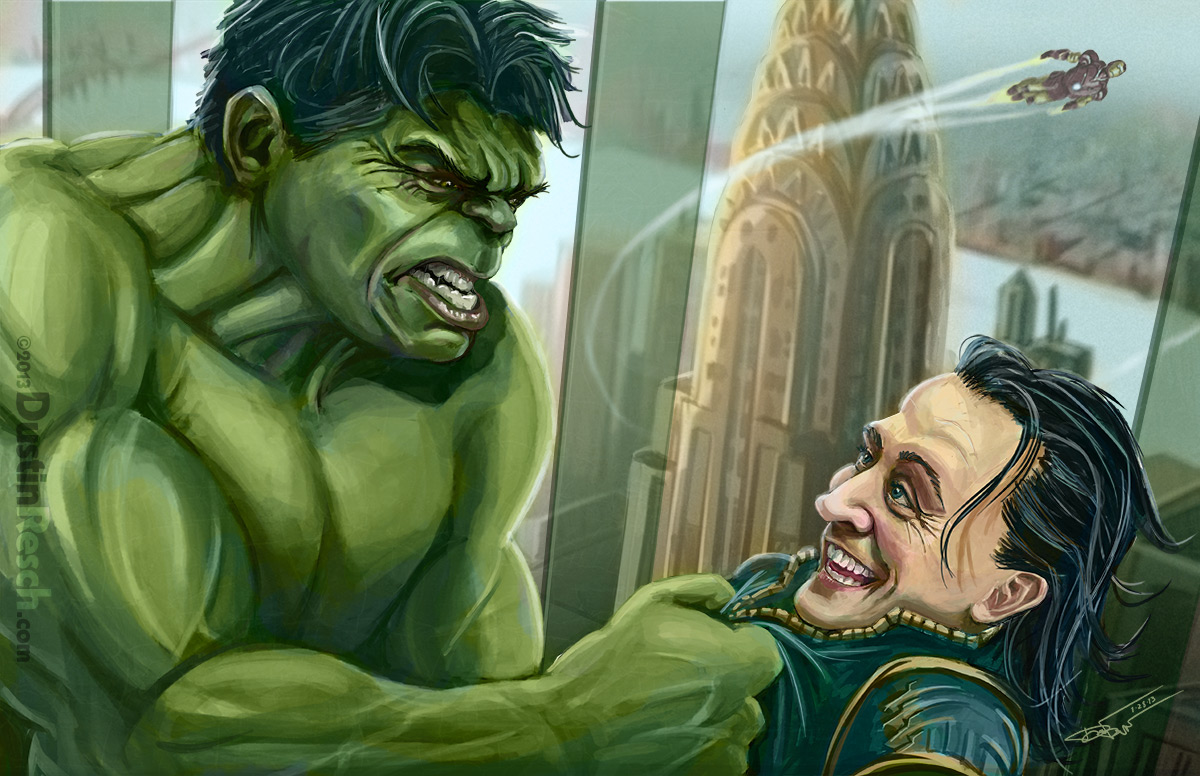
Wacom... SMASH! (Hulk & Loki for Comic Con 2013)


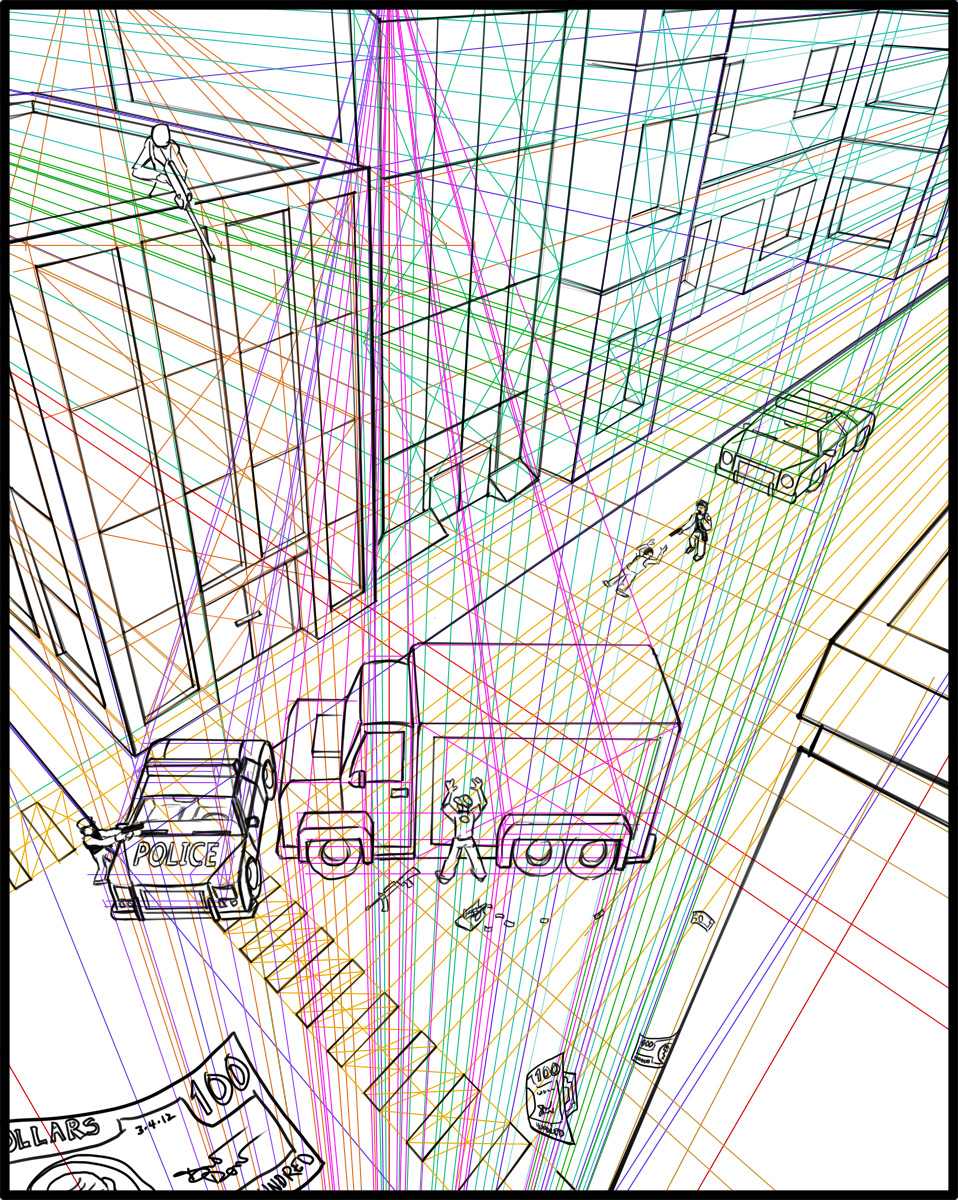
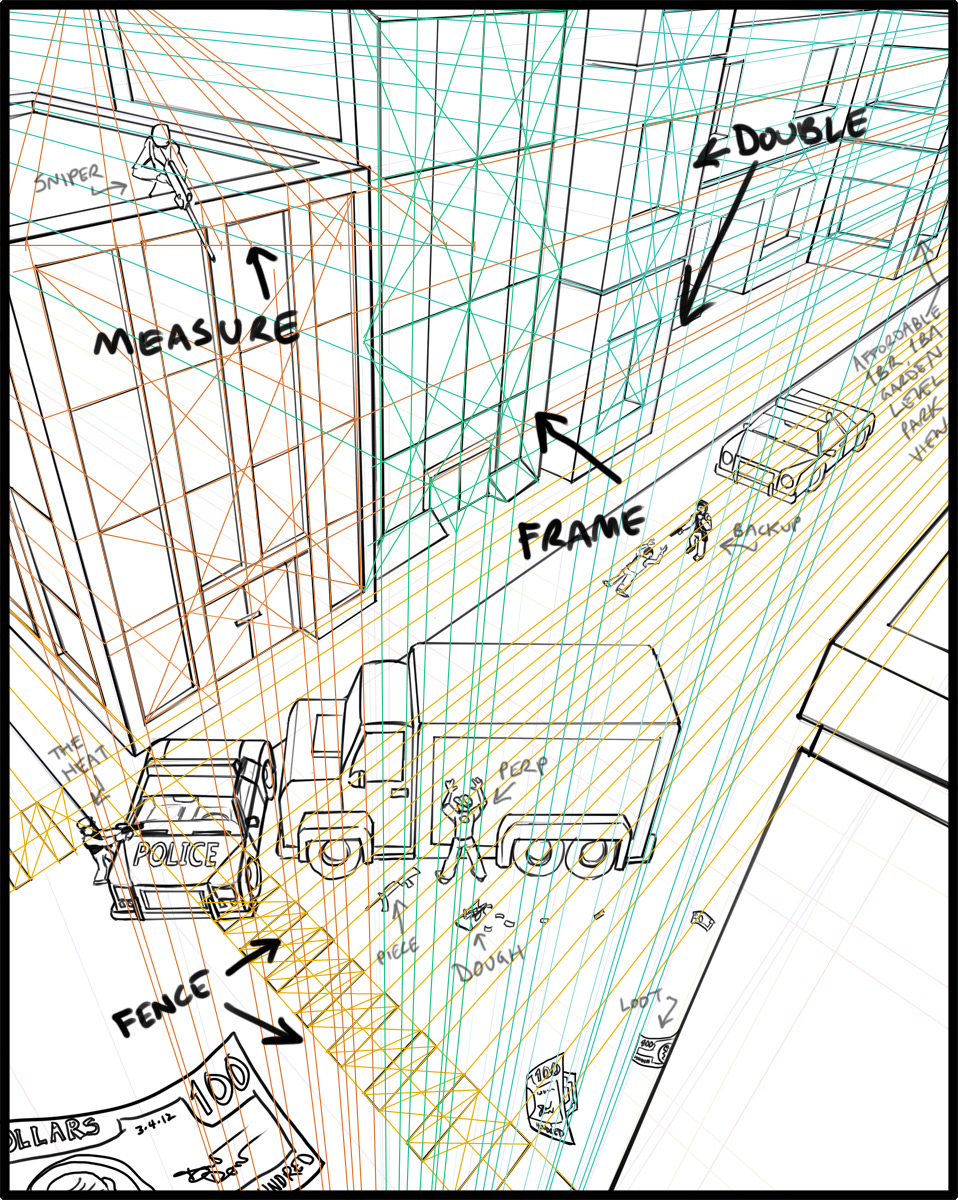
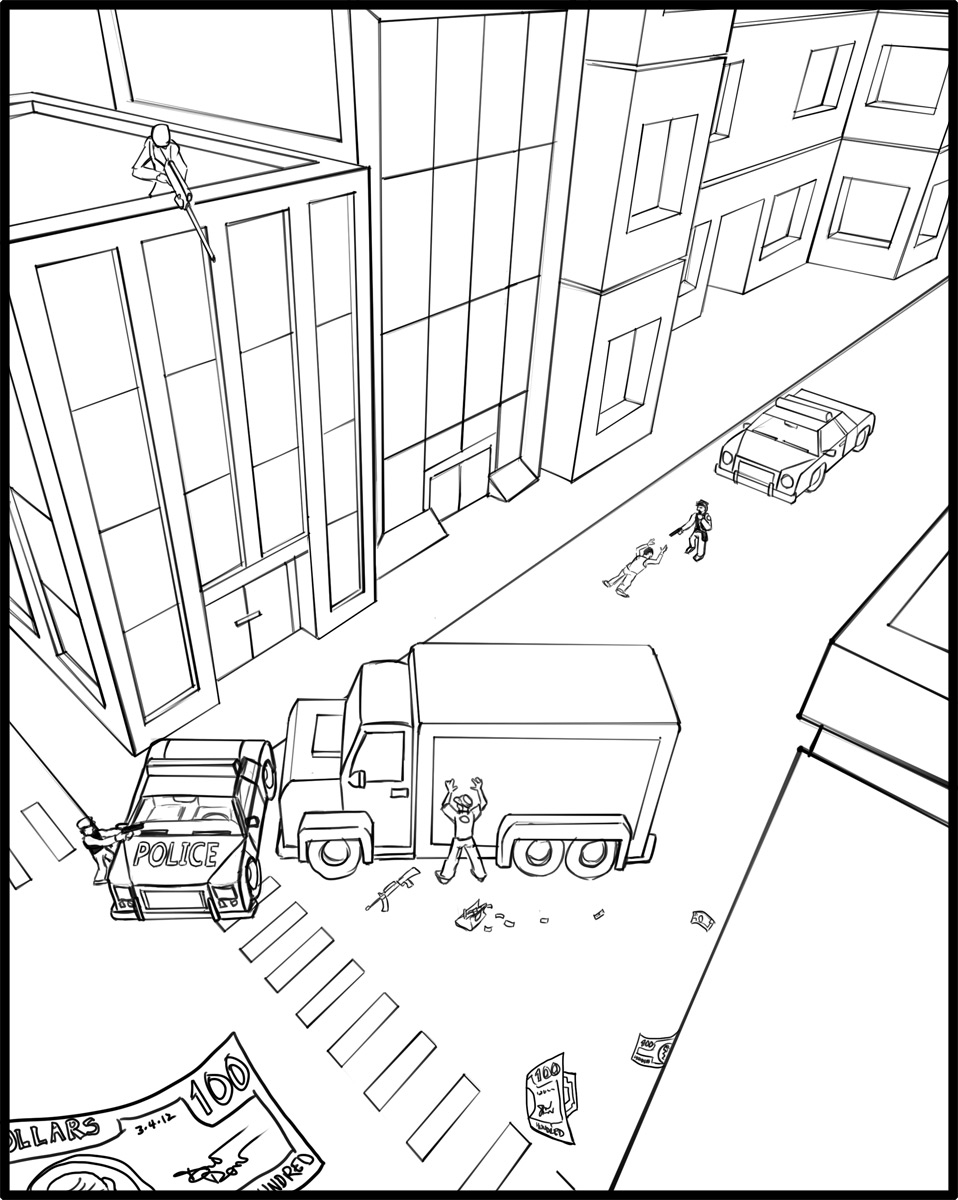
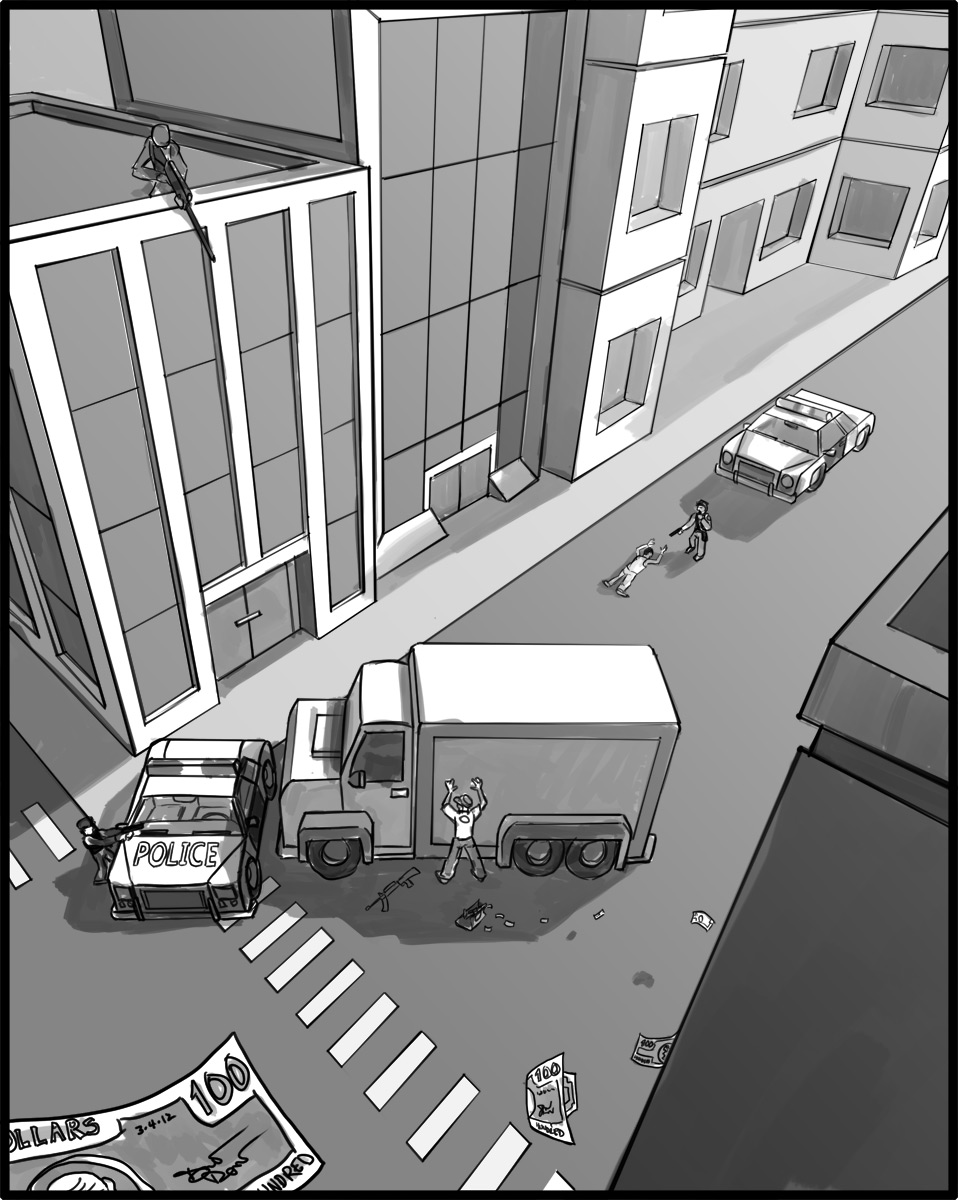
I've been pounding on this thing for weeks... I have a few more pieces planned to get done and printed before the Denver Comic Con (http://www.denvercomiccon.com/2013/dustin-resch/ ) but this is the most ambitious, and the one that was the toughest to get through (cityscapes are not my friend).  I'm pretty thrilled with the final result, and it's printing really nicely too.  Prints will be for sale at the convention!
  Enjoy!

UPDATE:  a quick process GIF to see some of the steps:
(click to enlarge)

Saturday, December 22, 2012

ILL 602: Concept, Technique & Illustration


I just finished submitting all of my final revisions for my illustration class projects.
The instructor (the inimitable George Pitcher) gave us till the end of the semester to do a
final round of alterations, and I'm pretty darn pleased with the semester's output.


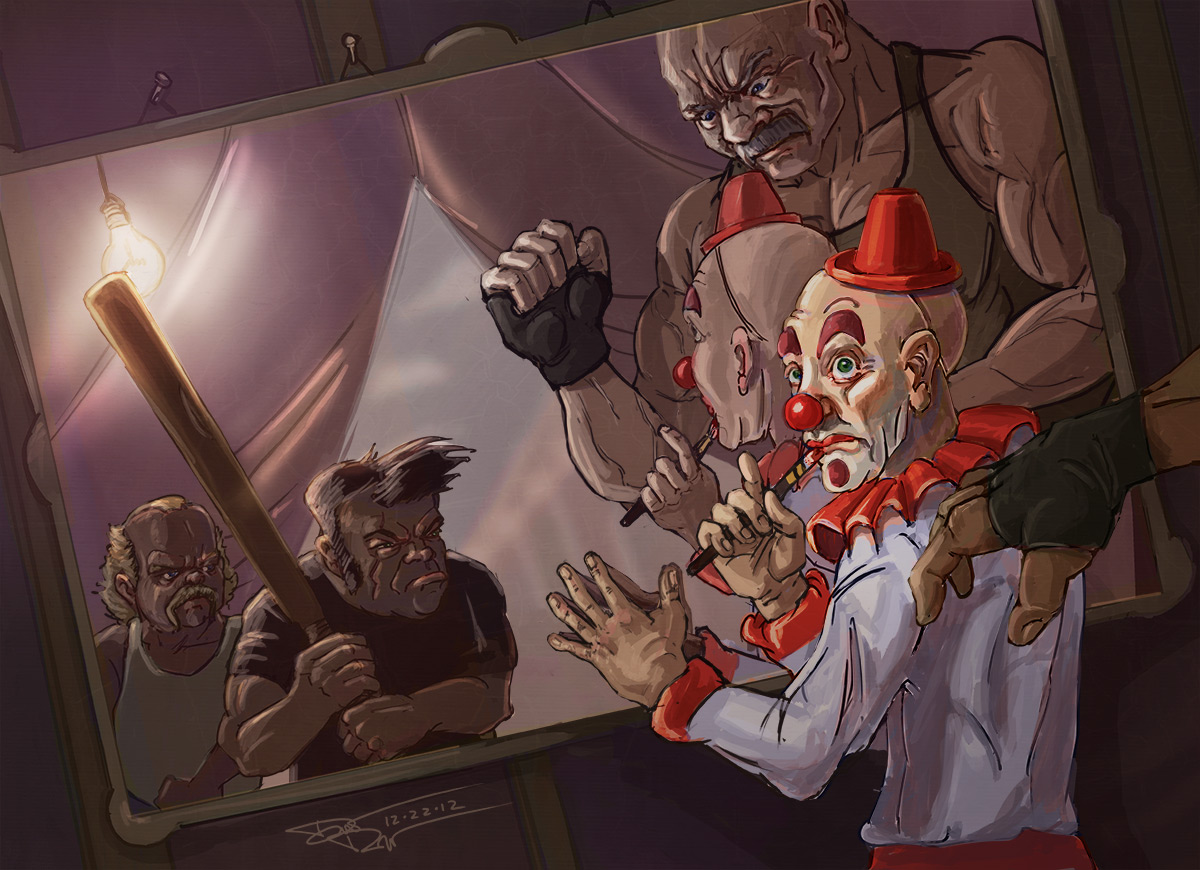
Project 1, Book Illustration: Collecting From The Clown


Project 2, Children's Book: Benjamin Bear


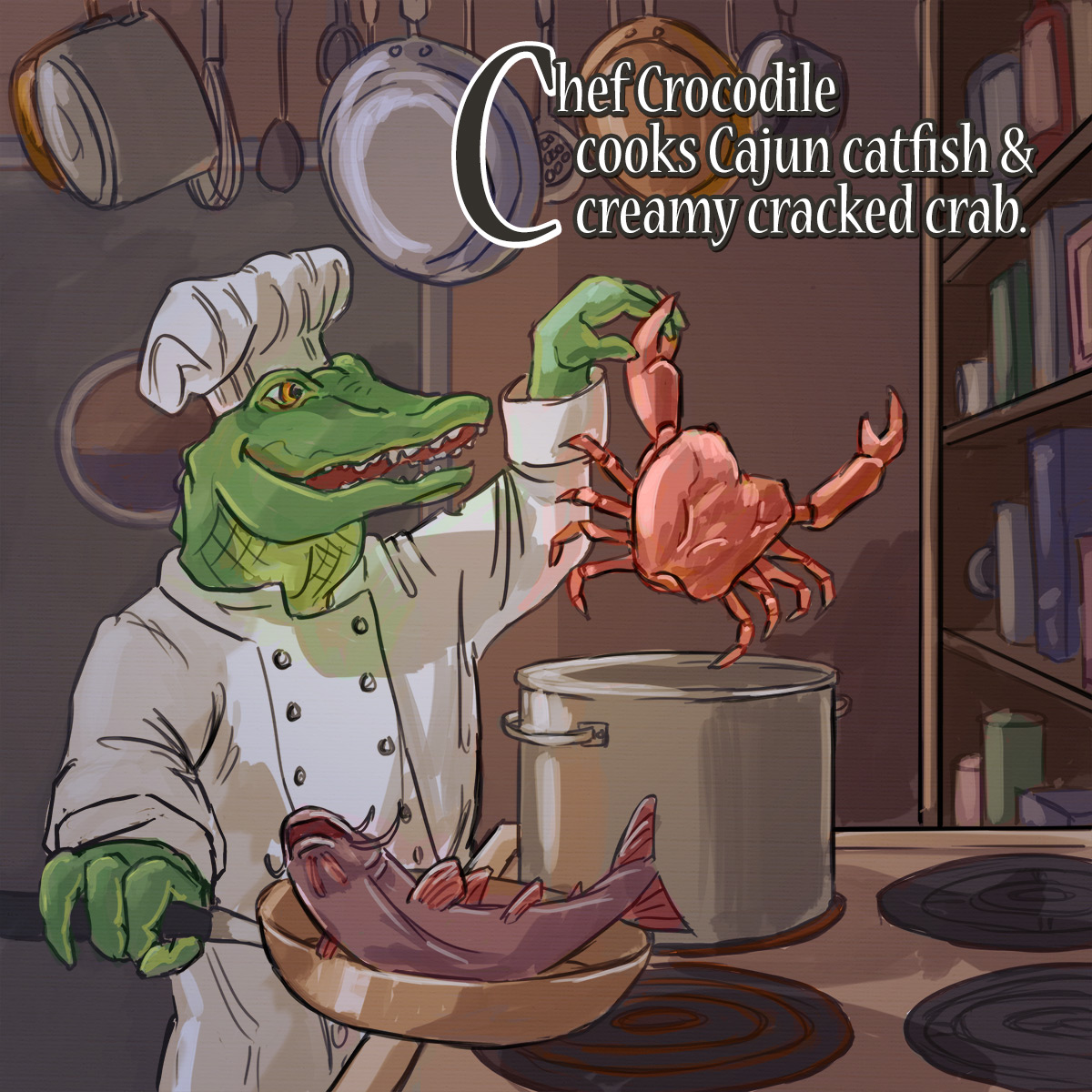
Project 2, Children's Book: Chef Crocodile


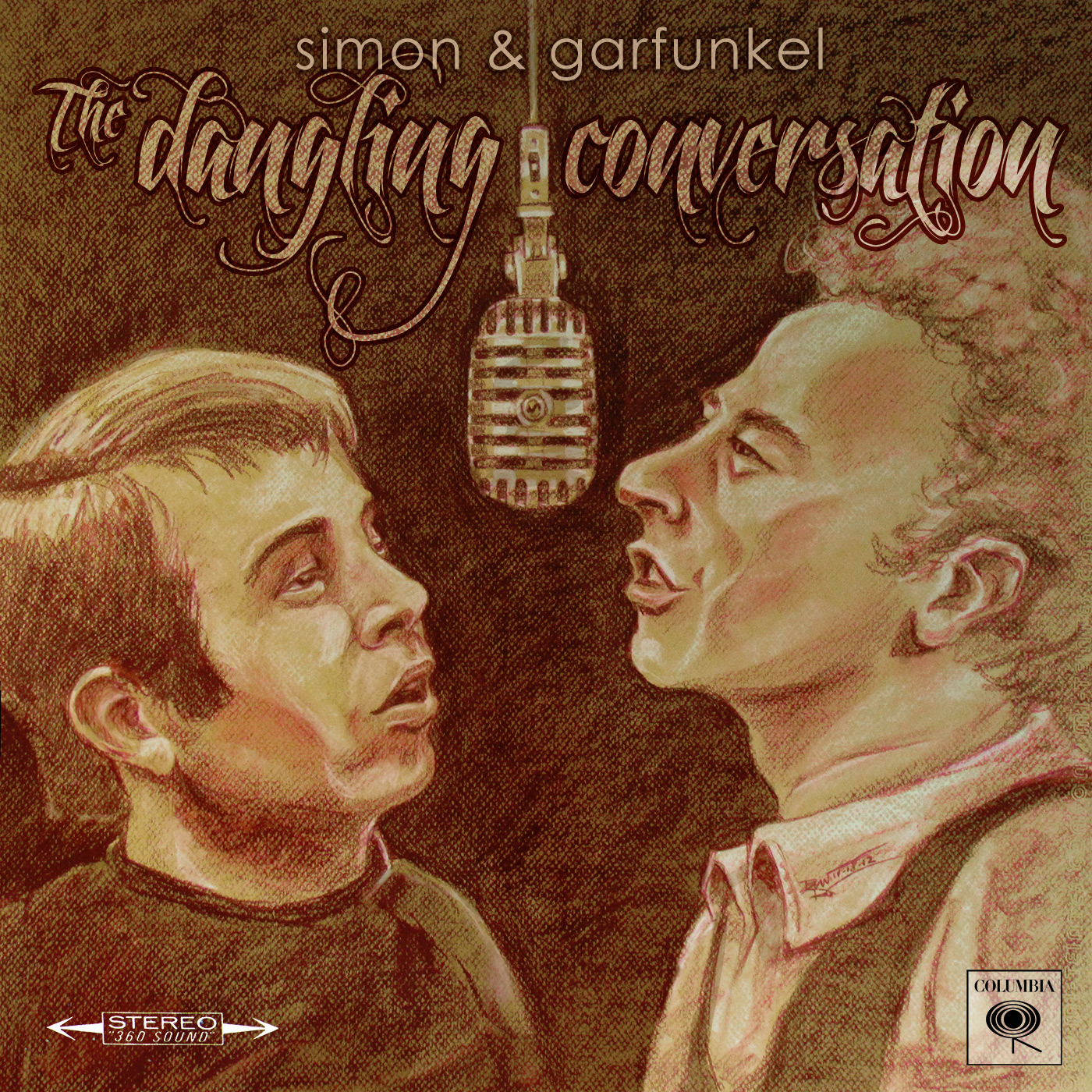
Project 3, Song Illustration (Album Cover): The Dangling Conversation


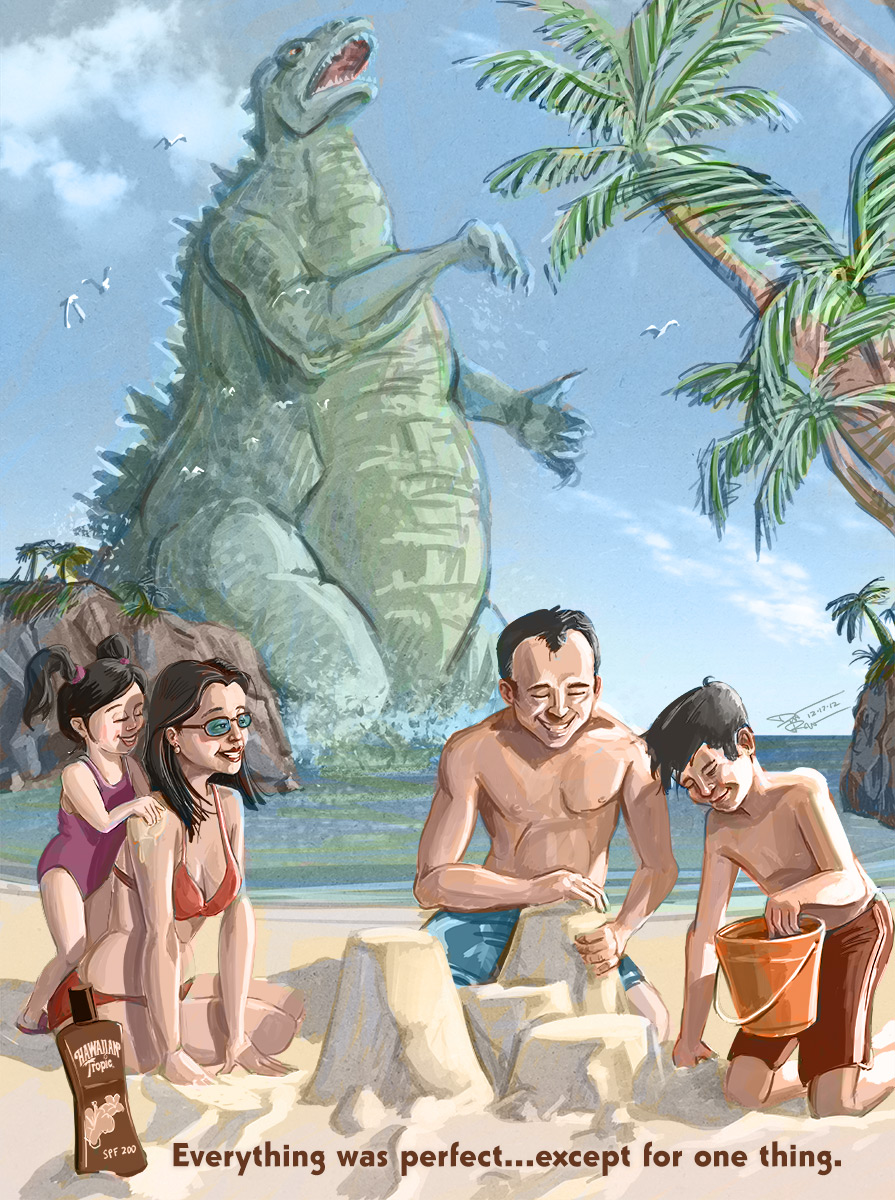
Project 4, Advertising Illustration: Hawaiian Tropic


Monday, November 26, 2012

Oh wow I'm REALLY behind on blog posting this semester.

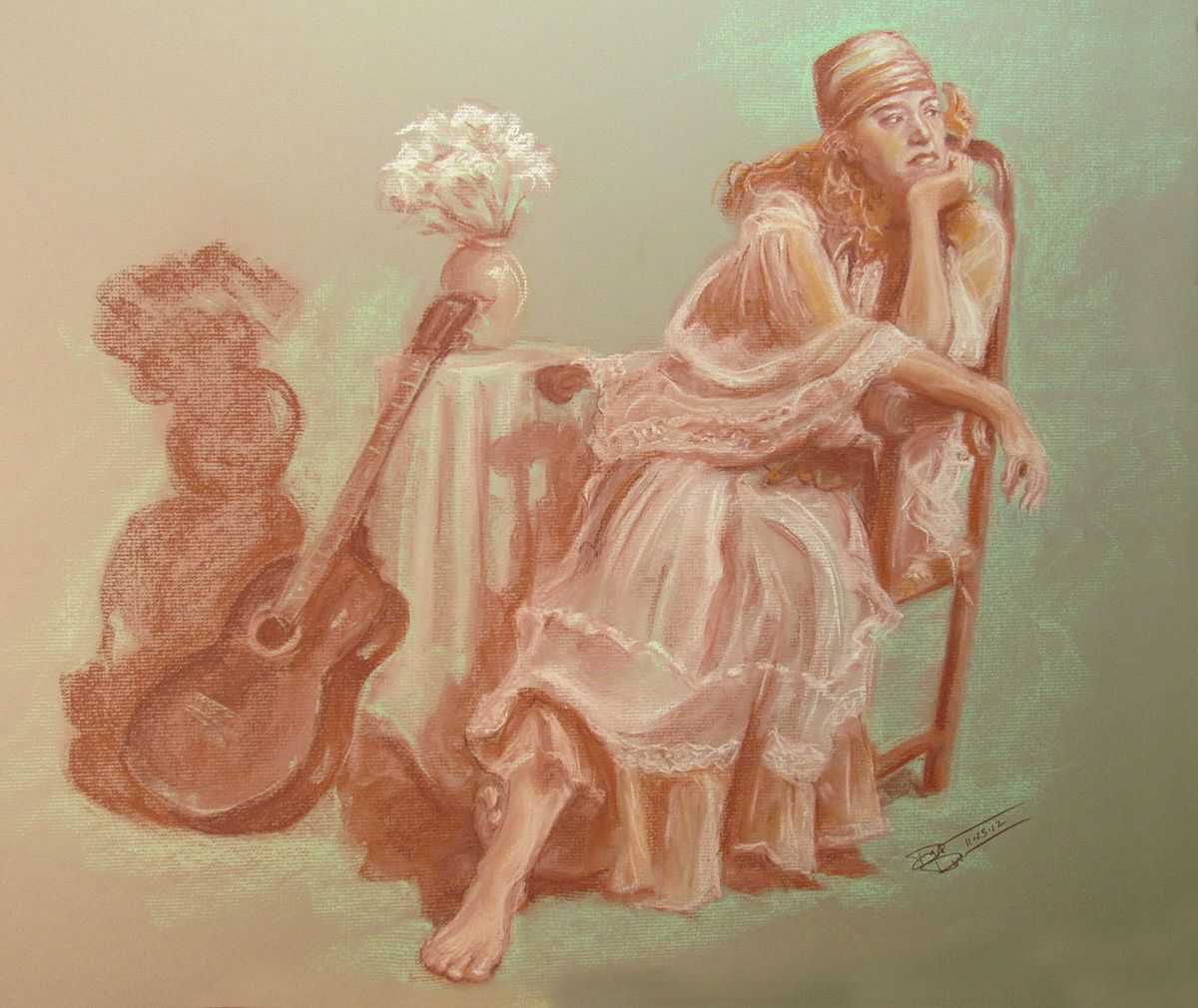
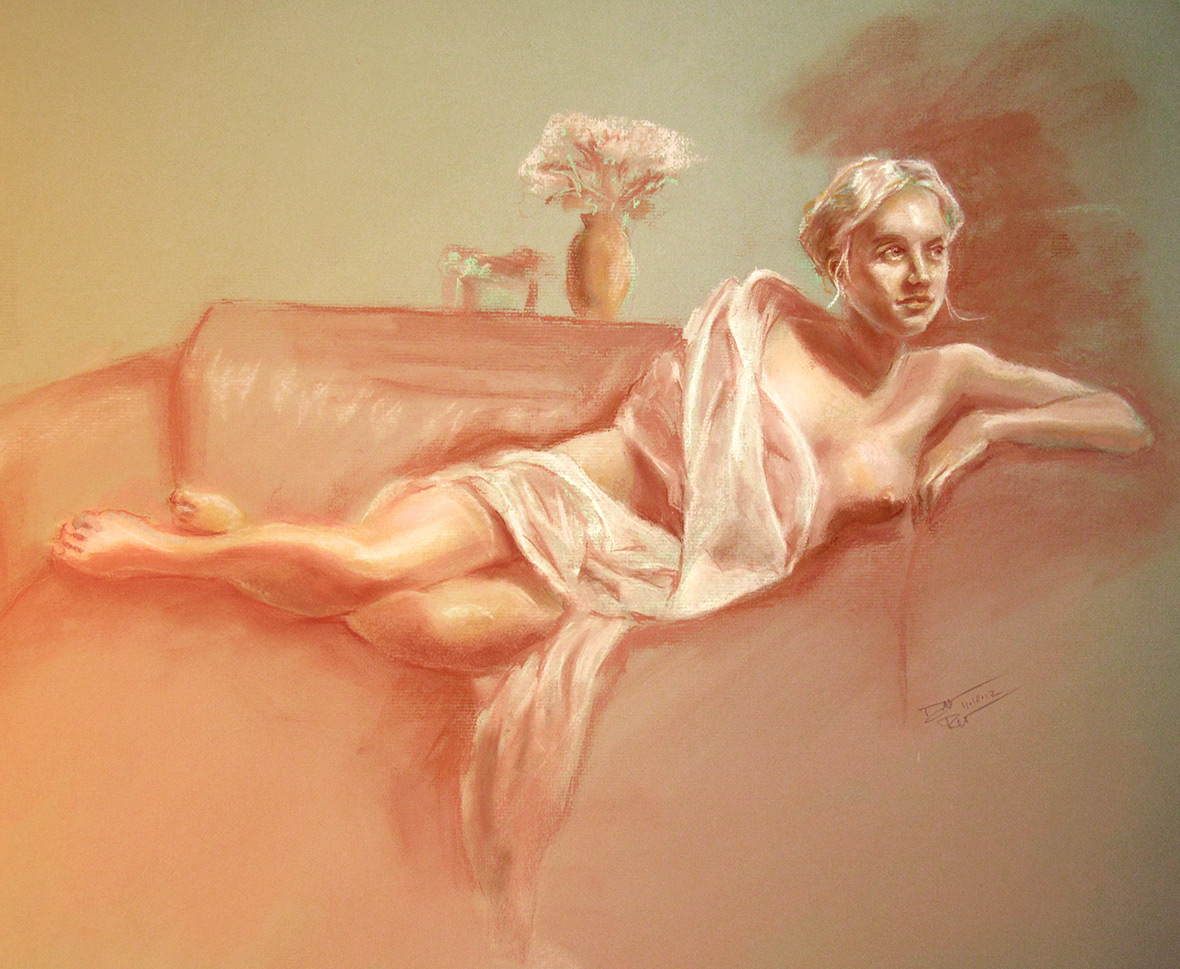
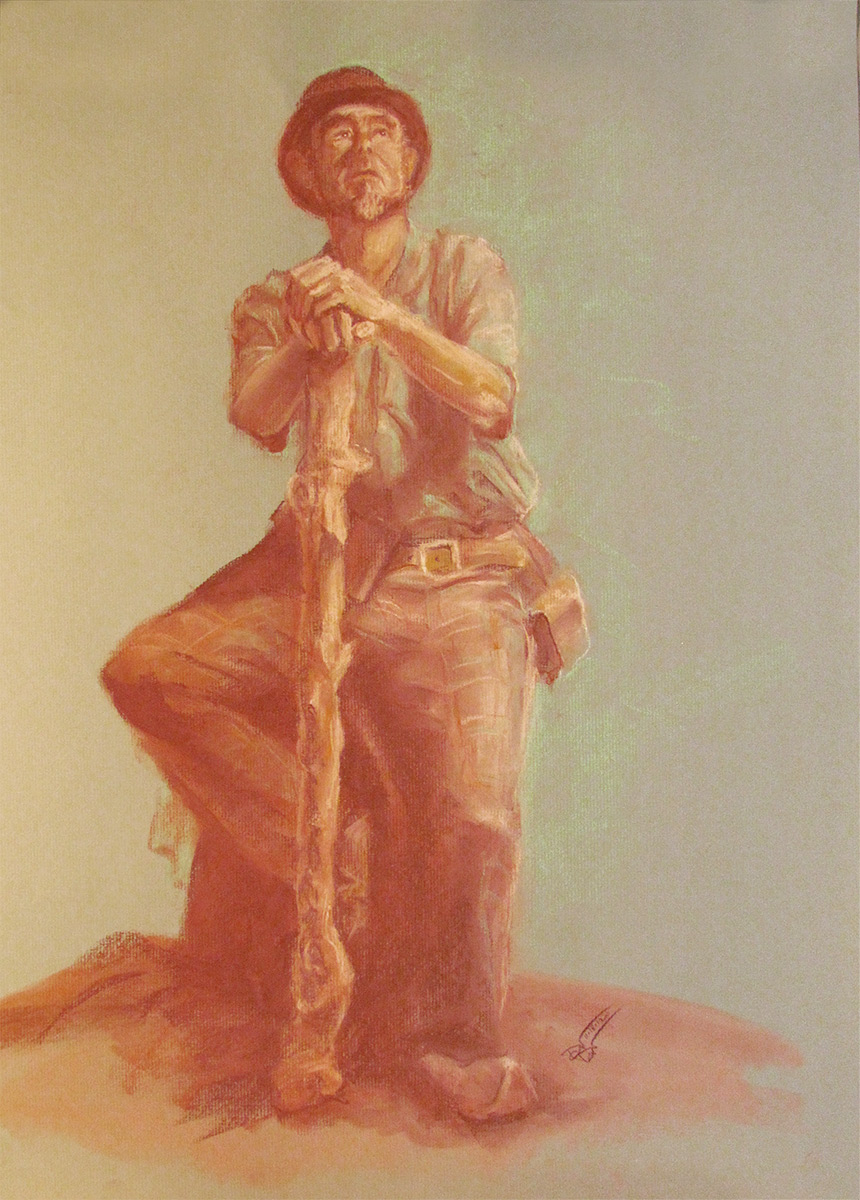
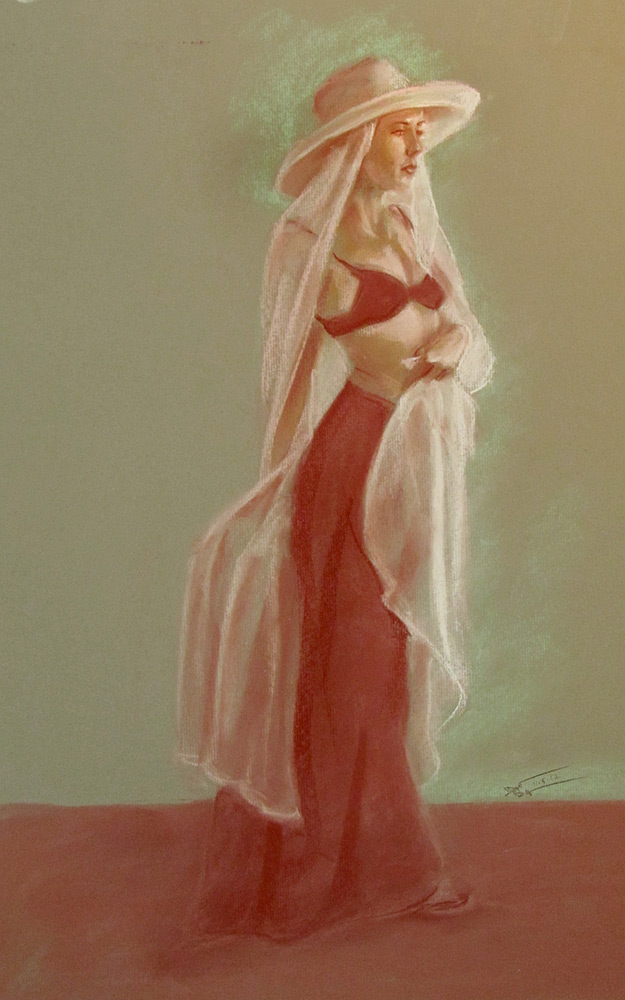
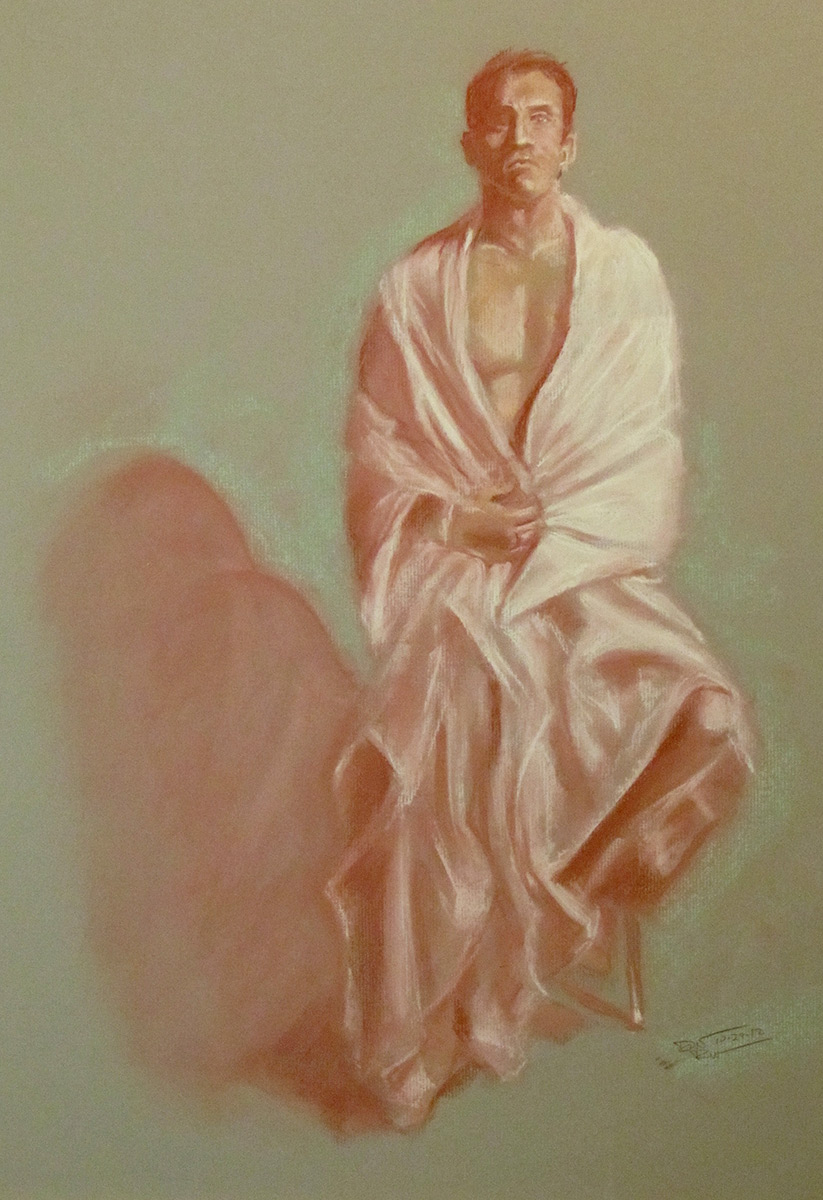
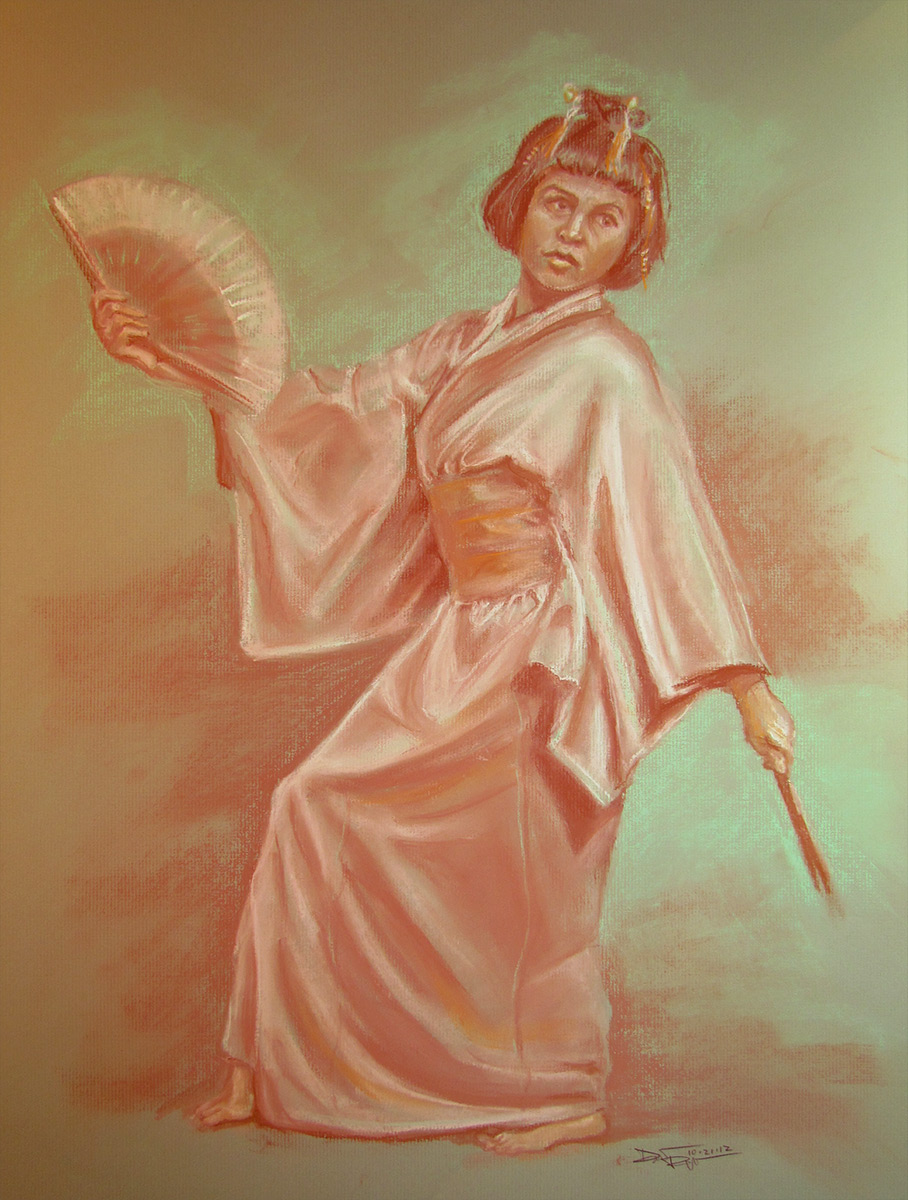
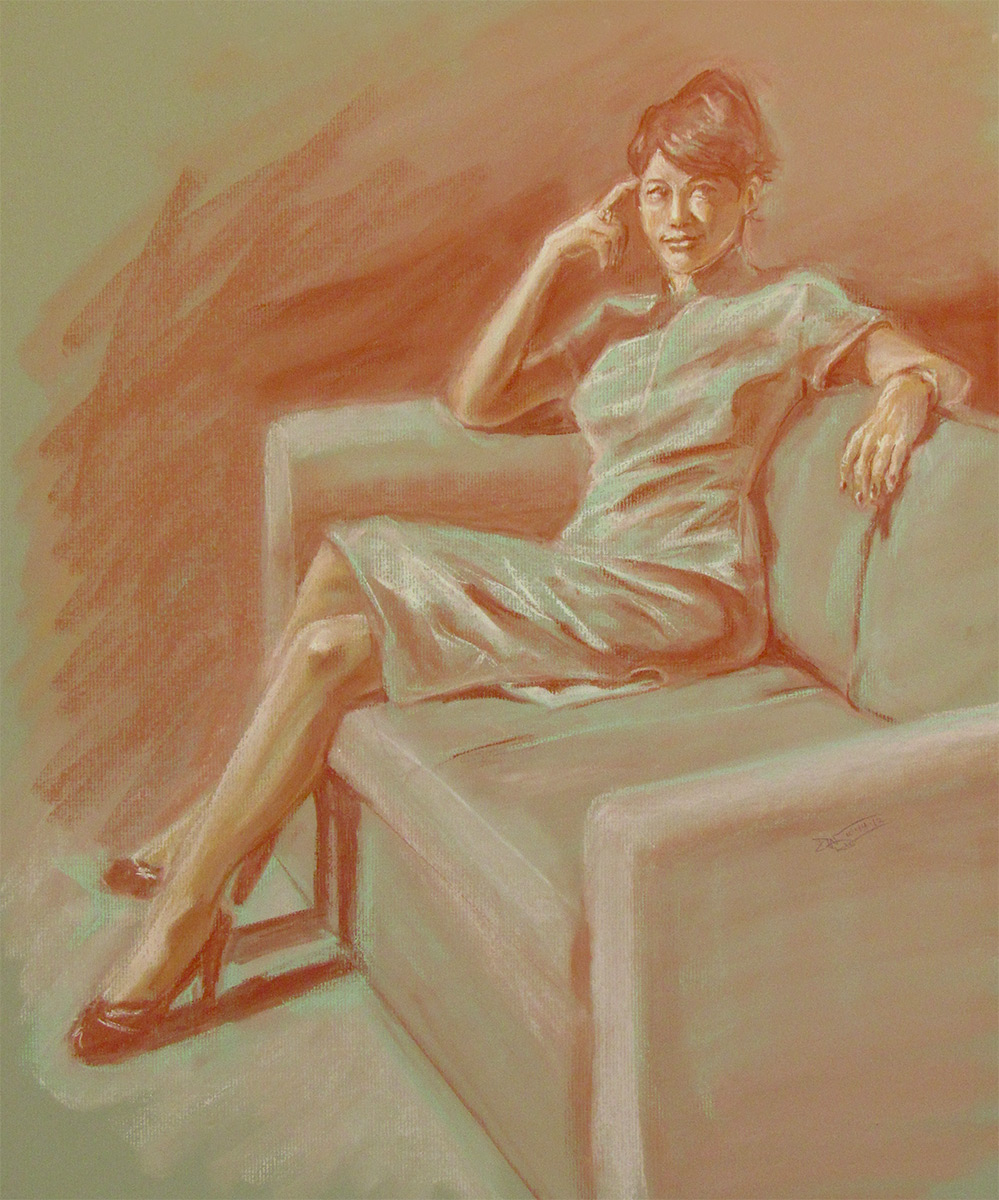
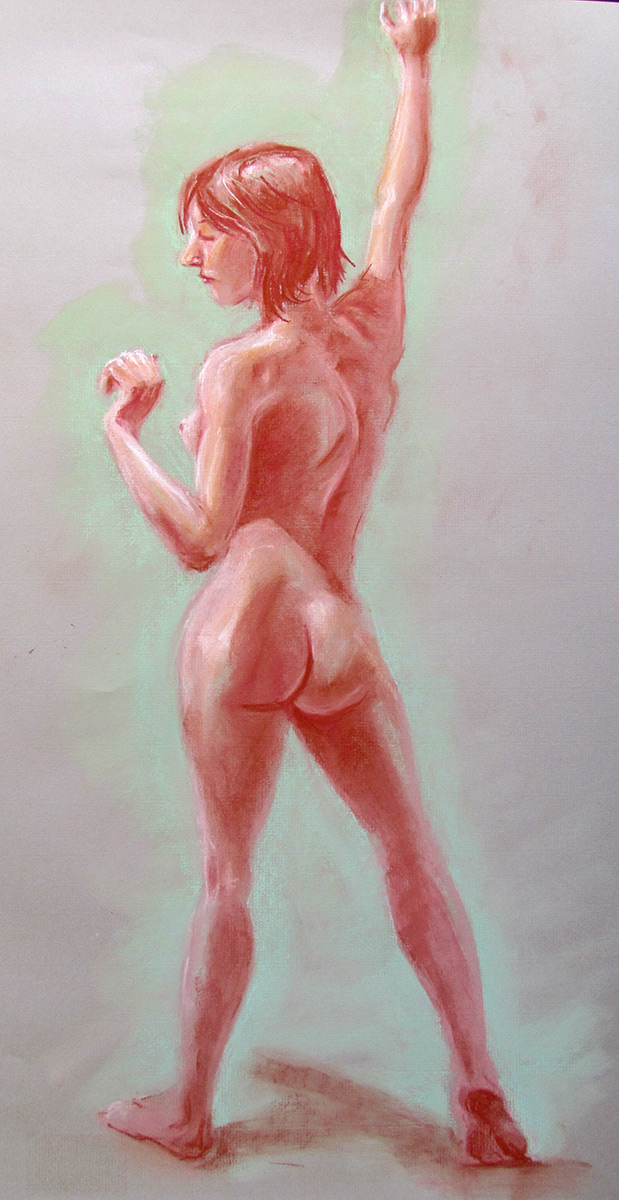
Here is a huge pile of new pastel life drawing work from the past couple of months:

(in reverse chronological order - newest is at the top, so you can see how much and how quickly I've been learning)


Wednesday, October 3, 2012

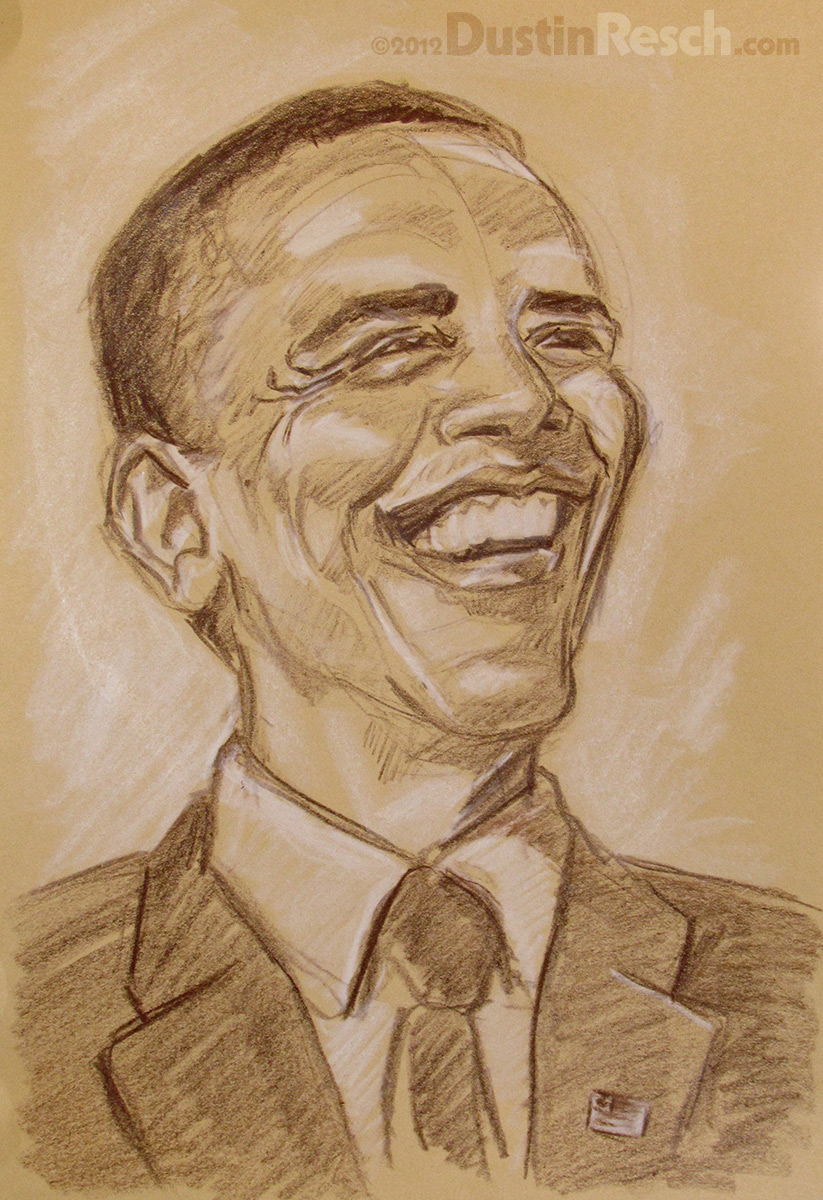
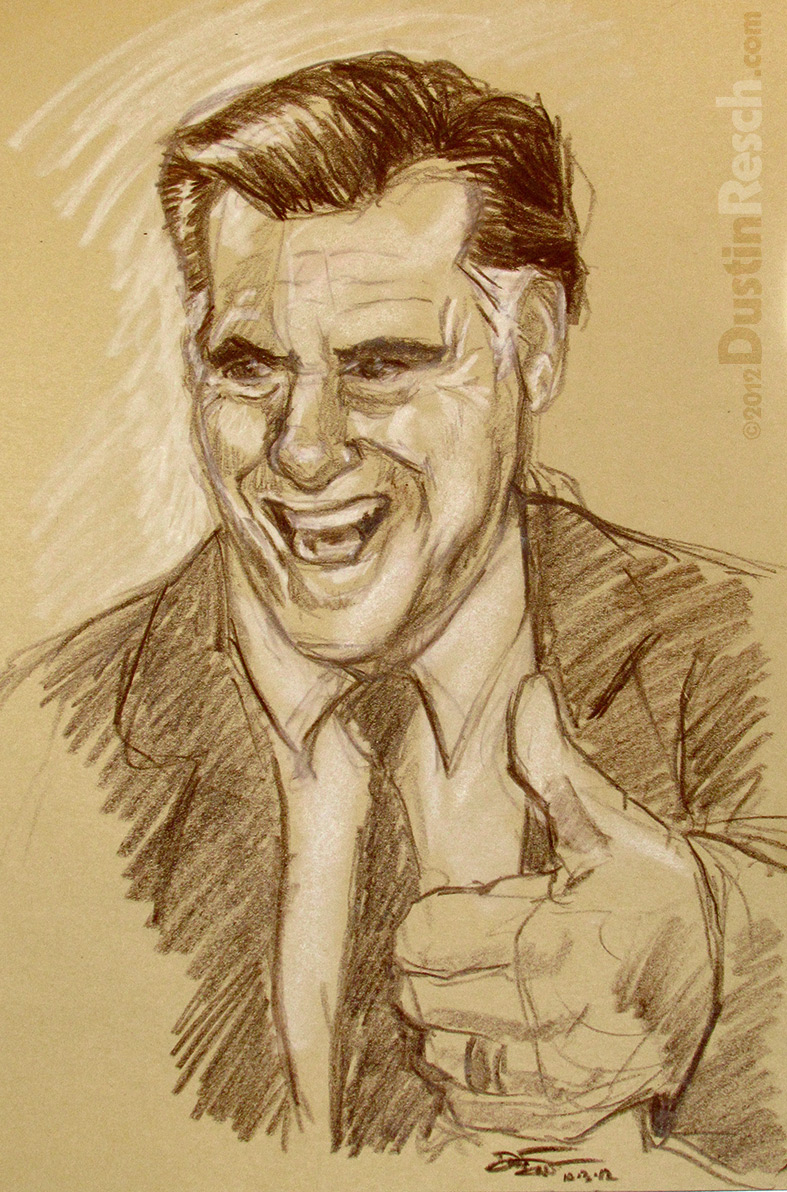
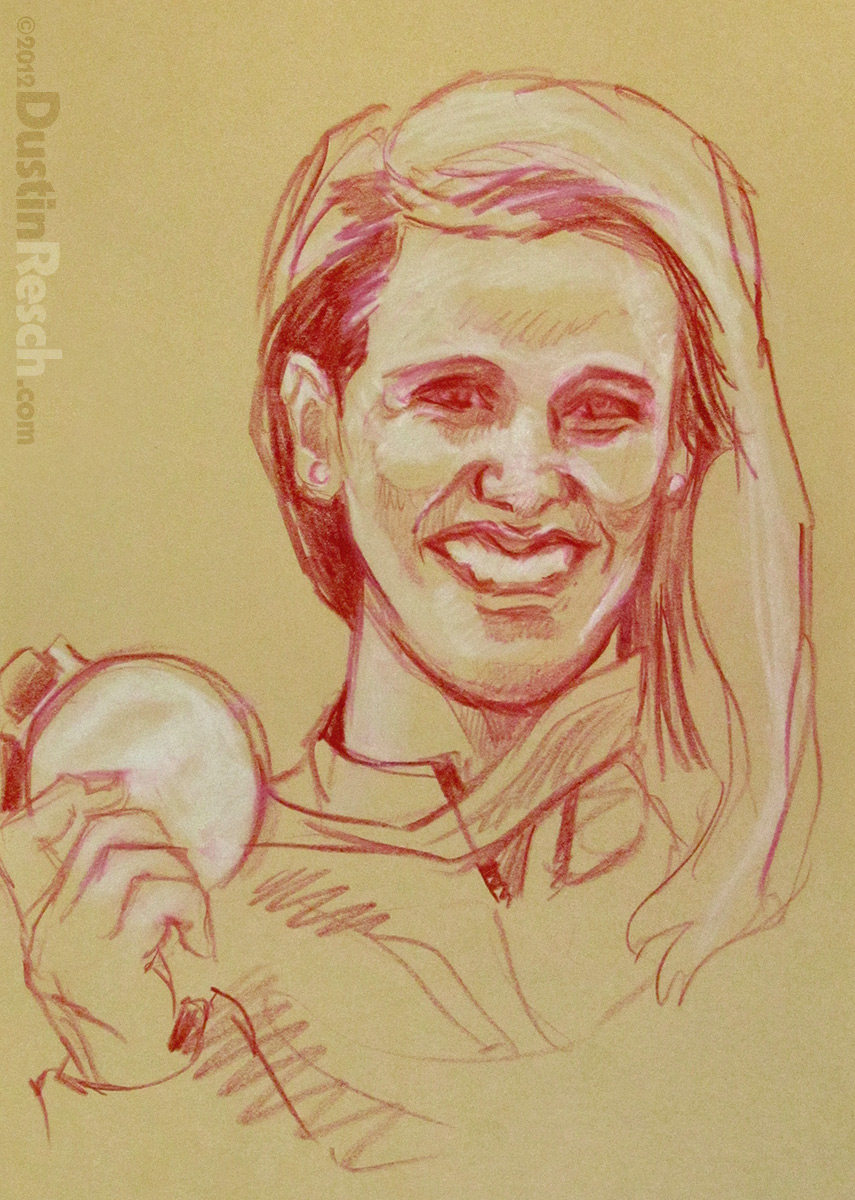
Portraits from Life Drawing Class

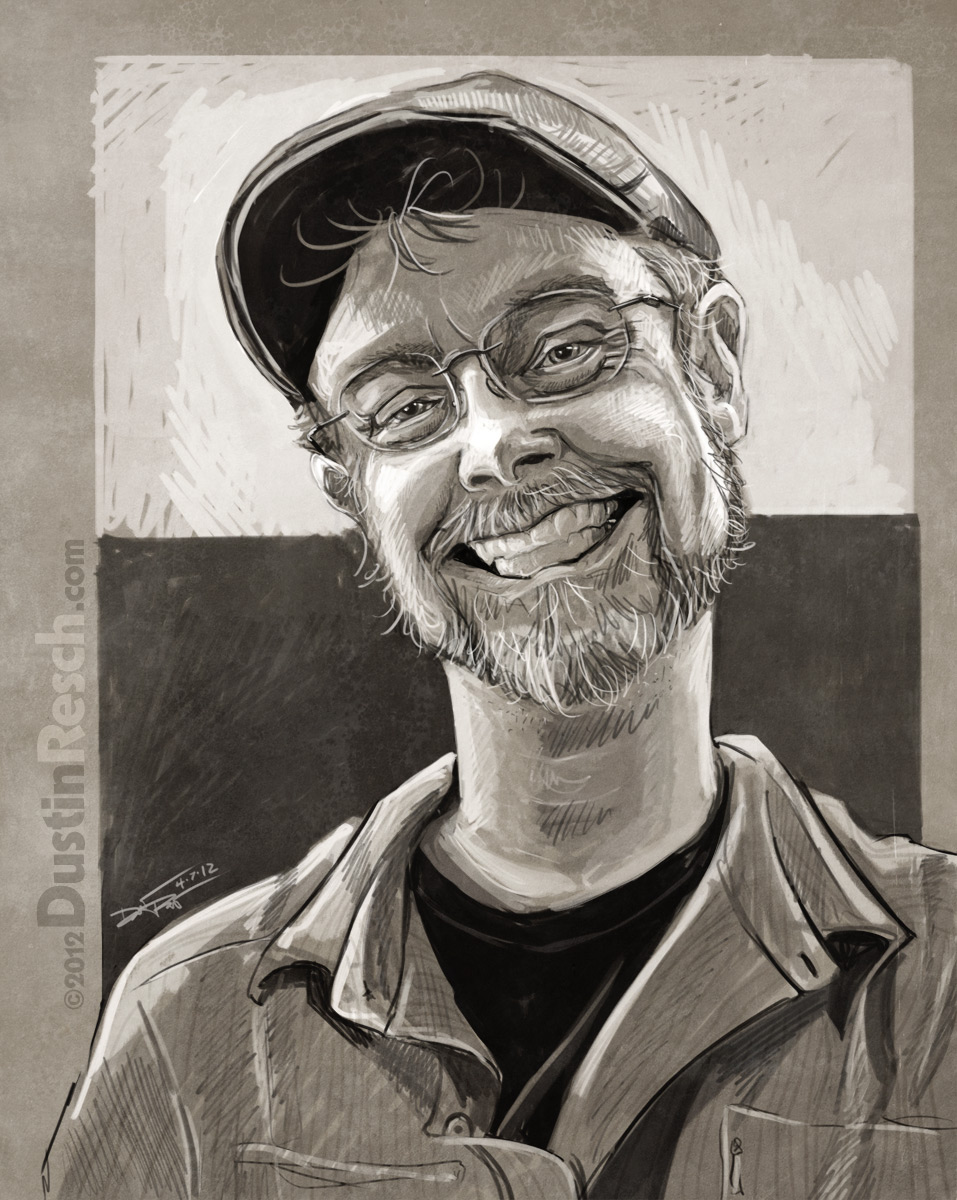
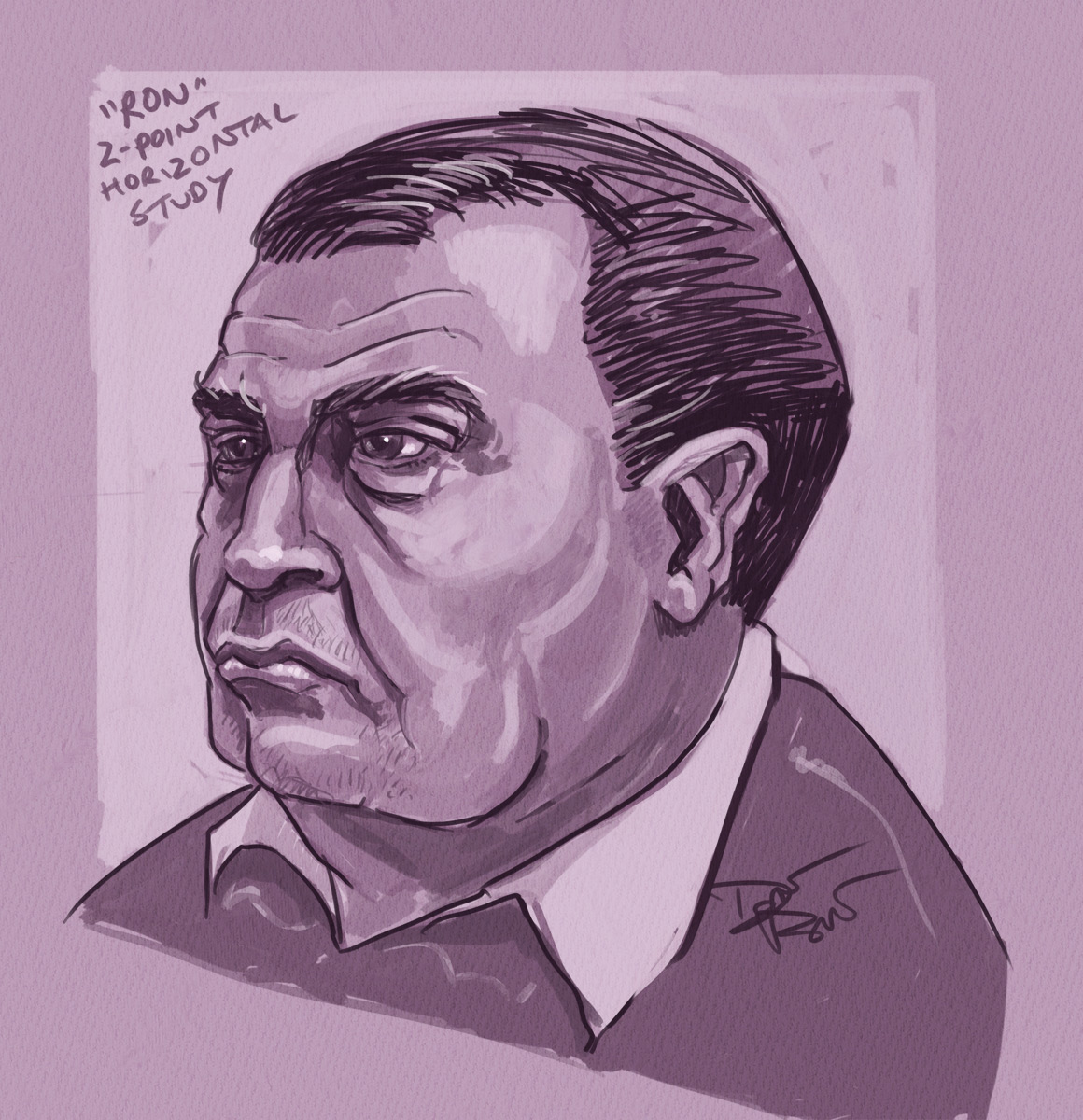
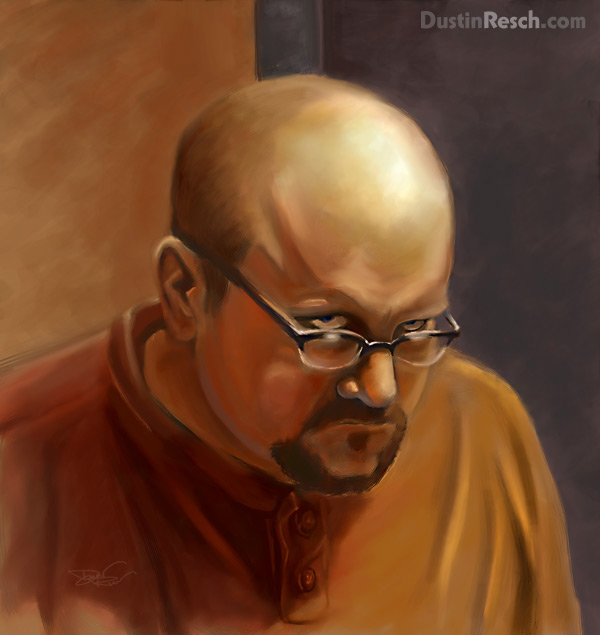
I just started a new quarter teaching a Life Drawing class at the Art Institute of Colorado.  Week 1 I assigned the class a self portrait/caricature assignment, and I brought a couple of famous faces to draw as demonstration.  The whole class got involved, we gathered 'round the sketchpad and worked on likeness and face construction techniques together.  It is a really fun group, we had a great session, and I got a couple nice portrait sketches out of it!  (It was Presidential Debate Night in Denver, so I brought the two candidates, and to even out the genders, brought a local wunderkind celebrity as well.)


Sunday, September 23, 2012

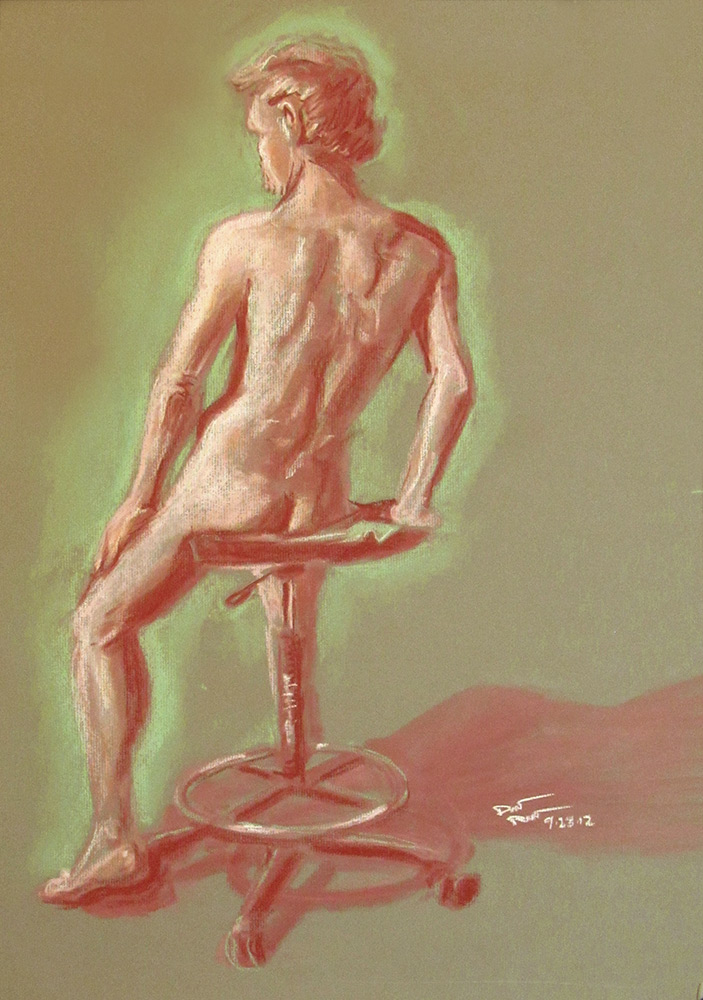
NuPastels all over EVERYTHING.

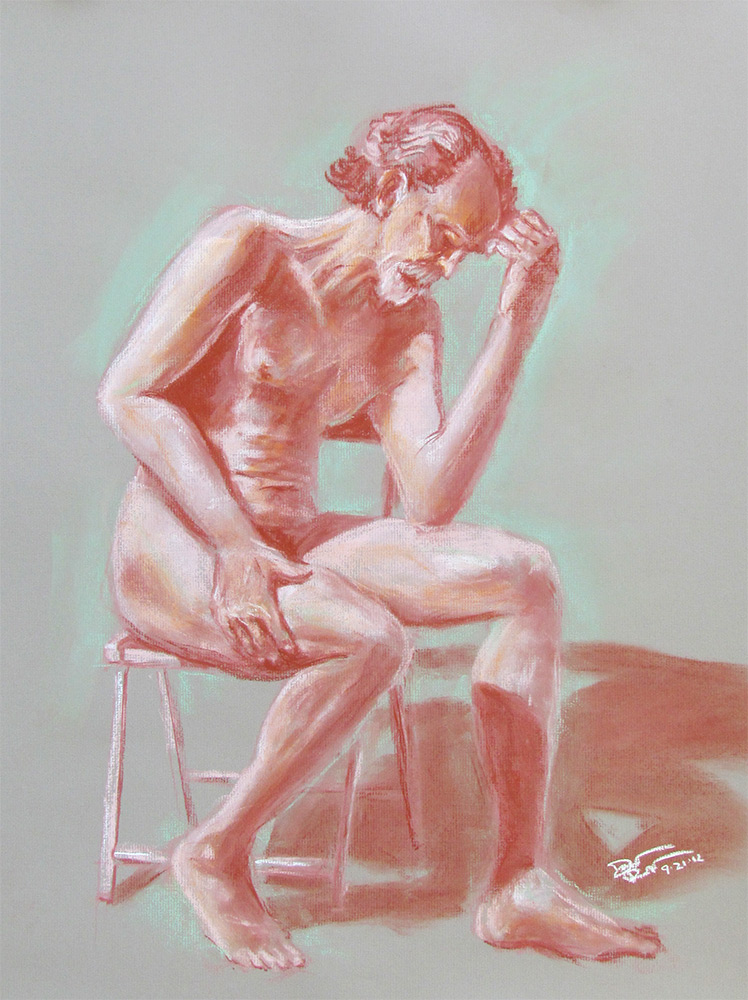
In the second week now of my fall semester at AAU - one of my classes is "Sustained Figurative Studies".  We're learning a specific rendering technique, involving a specific palette of NuPastel chalk on velvet gray toned paper.  It's William Maughan's technique originally, and he's a gentleman definitely worth learning from.  It's an uphill battle, but I'm starting to get a feel for this stuff.


Tuesday, August 28, 2012

AURORA RISE! Wonderful benefit event for the Aurora theater shooting victims

This past weekend, our neighborhood comic book store All C's Collectibles hosted a marvelous benefit event to raise money for the Aurora theater shooting victims. They had amazing comic book talents come in to do signings (Mike Mignola, Matt Fraction, Steve Niles) and then had a great silent auction/live auction event. All told, they raised about $20,000 for a very worthy cause.

 I had three of my limited edition prints in the live auction (Thor, Iron Man, Wolverine) and had a great time. It was wonderful seeing the prints go to a good home, and we got a few nice signed items as well. All photos below are credited to my friend Scott Griffin, who was volunteering at the event as well.

(Contact me at artwork@dustinresch.com if you are interested in purchasing one of my signed, limited prints of these or other pieces)


Chiaroscuro wrap-up

A few weeks ago, I finished up the insane summer semester at AAU Online.  Been keeping busy, so I hadn't got around to posting any of the images to my blog (unfortunately, it's a ton easier on Facebook, so things are updated there all the time.  (Check out my Facebook Fan Page if you can't bear to be the last to know))

Here are the last few assignments from the charcoal mess class - I learned a ton, and got a few things done that I really liked.


Sunday, July 8, 2012

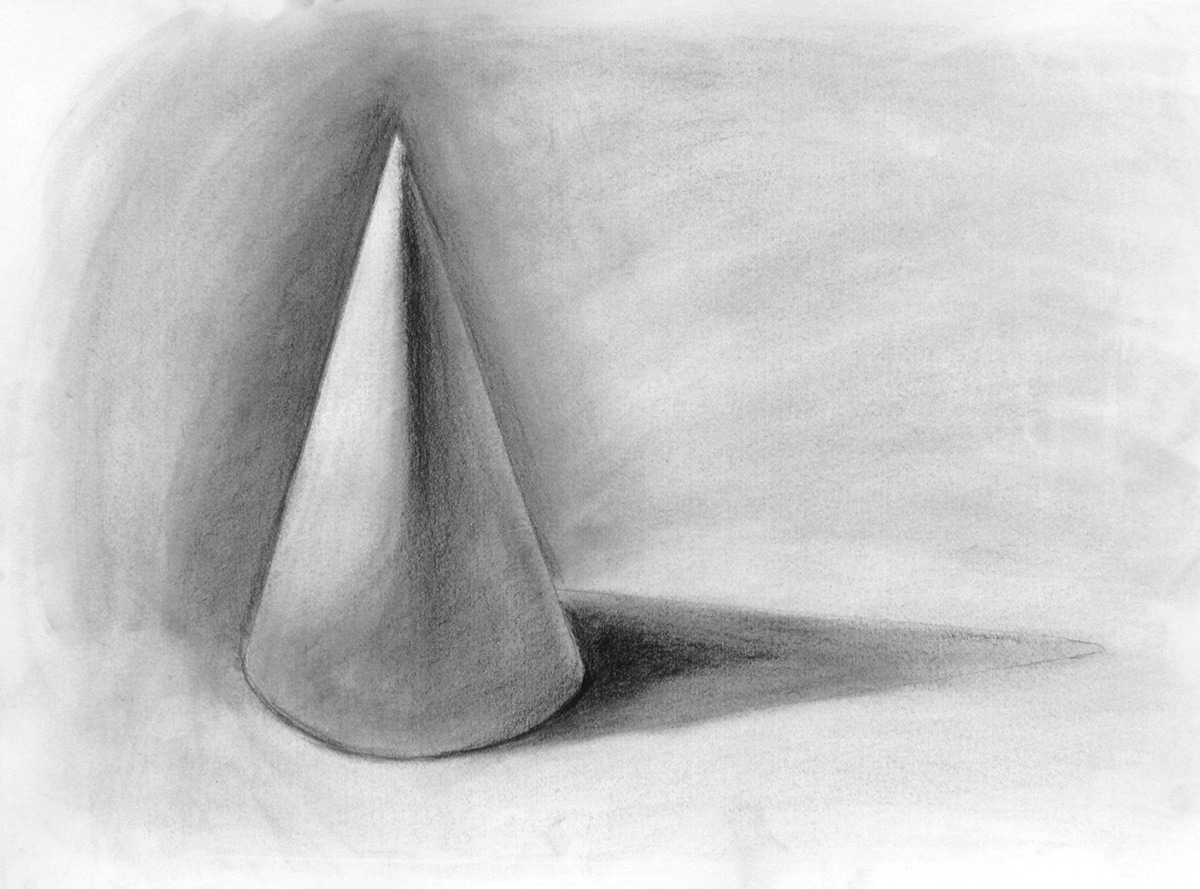
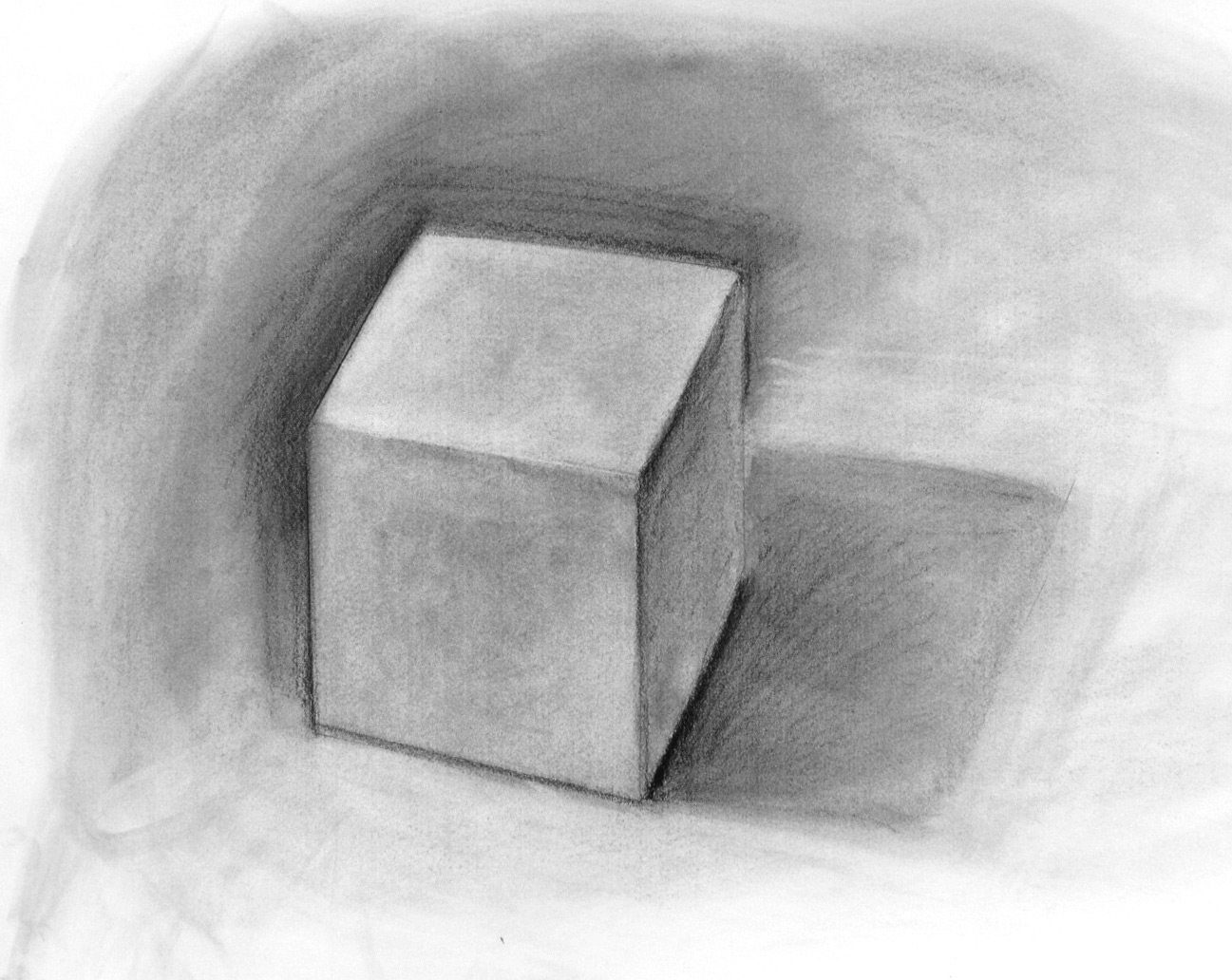
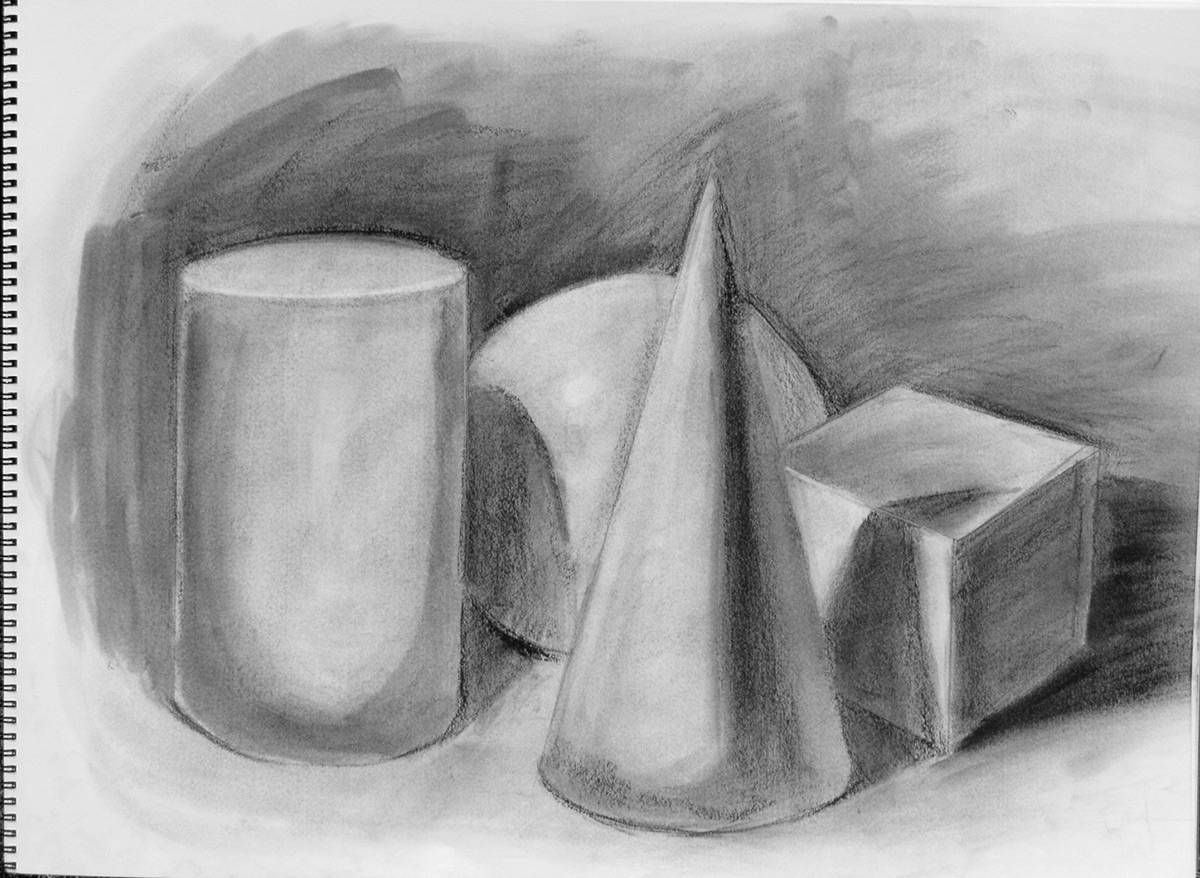
Chiaroscuro class so far.

chiar·oscu·ro

noun \-ˈskyr-(ˌ)ō, -ˈskr-\
plural -ros
1: pictorial representation in terms of light and shade without regard to color
2 : the arrangement or treatment of light and dark parts in a pictorial work of art
Italian, from chiaro clear, light + oscuro obscure, dark
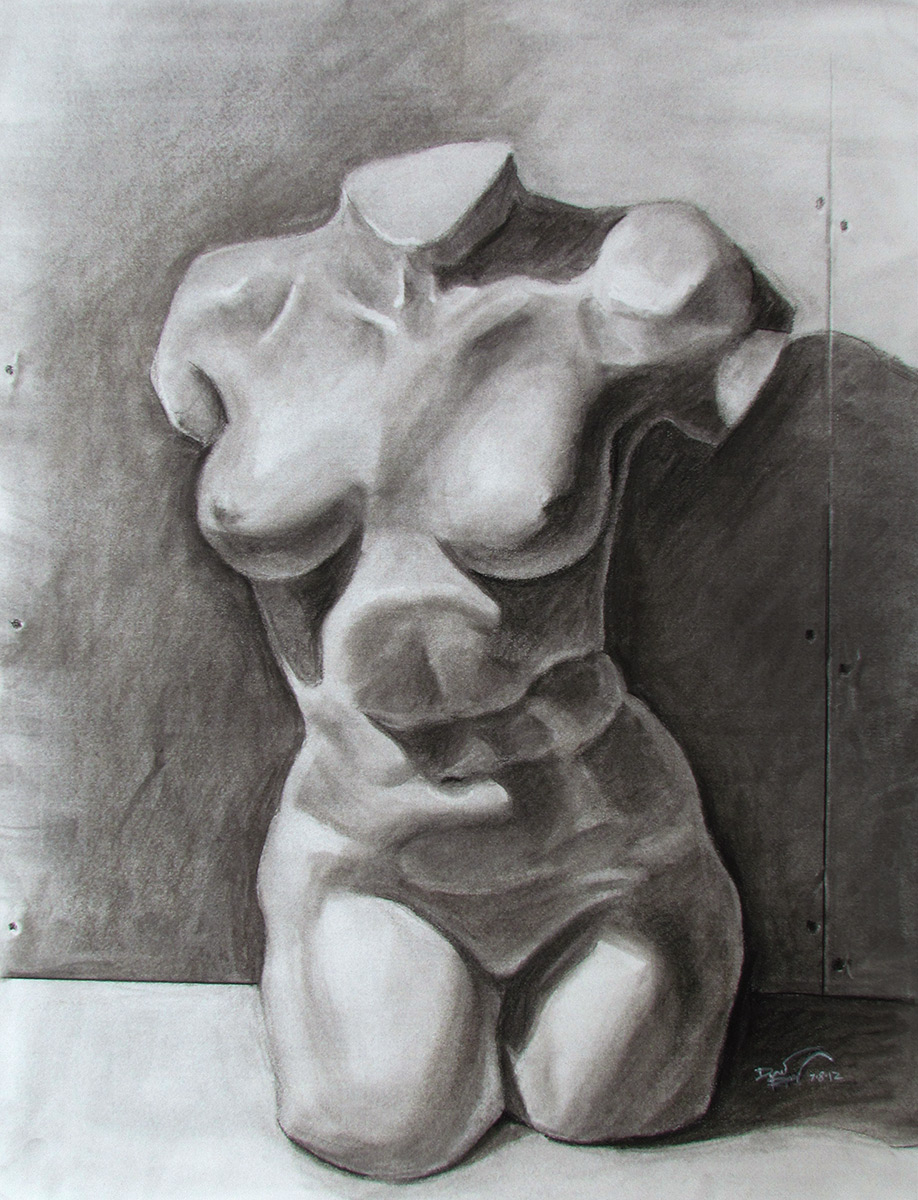
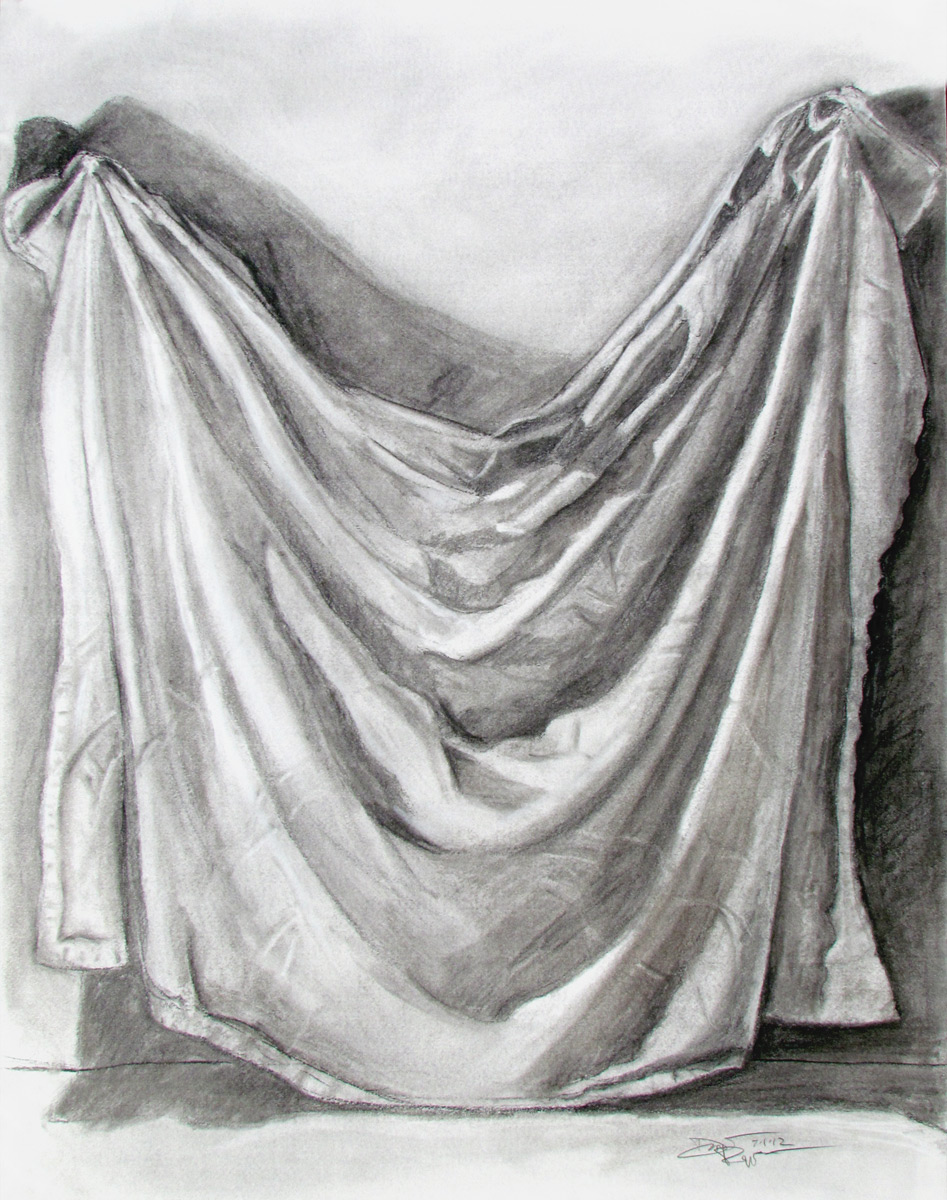
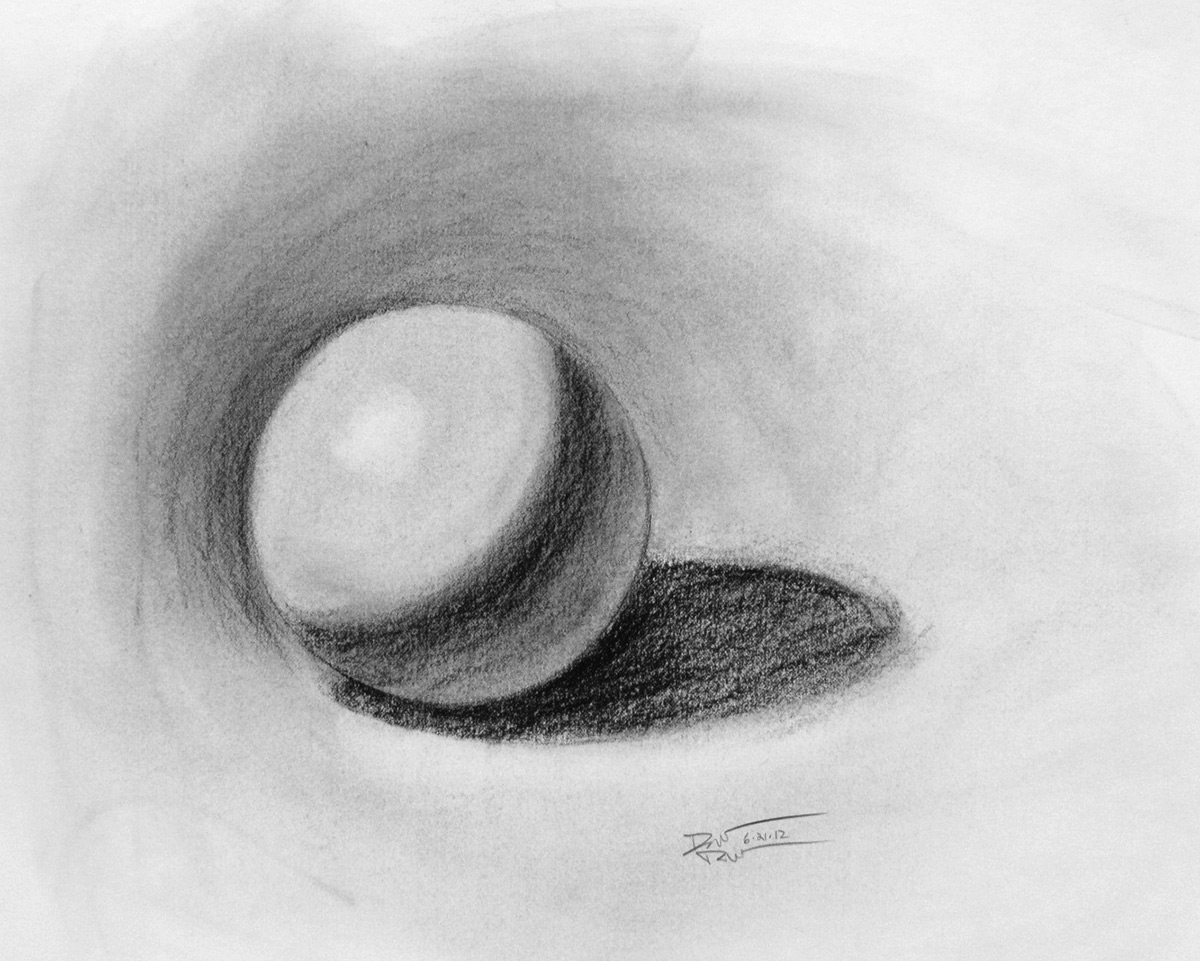
I'm taking a double-intensity (half-length, so two separate units due per week) Chiaroscuro class during the summer semester at Academy of Art University (online).  We're coming up on the midterm mark, so I wanted to share some of the pieces that have come about so far.  
We're working in charcoal... I have always HATED charcoal, with its scratchy noises and messy dust.  A case of pneumonoultramicroscopicsilicovolcanoconiosis just waiting to happen, if you ask me.  But the scratchy, icky, filthy stuff is starting to grow on me.  My value vision is getting much stronger, and I'm getting used to the tricks of moving the mess around on the page to make it do what I want.  I'm starting to really enjoy myself, and getting excited about the rest of the class!


Tuesday, June 26, 2012

God of Thunder!

I did a painting of Thor and his little hammer, as a gift for Brooke for our anniversary.  Here's the painting, and a little process GIF so you can see a quick blurry version of how it comes together.


What have we learned today? Surprise! I like Pie.

So I'm back at school... taking "The Renaissance Art World and its Classical Origins".  In case anyone really likes to read these rants,

Discussion Topic:

How did the Romans incorporate Greek principles to create a unique Roman aesthetic? Please use an example to cite specifics (e.g., the Pantheon) to illustrate your point.

Is art a mimetic process? Does art re-present? Can the artist really be the "idea-maker' today, or does the idea already exist, as Plato claimed?
_______________________________________

Dustin's Overly Verbose Soapboxery:

_______________________________________

I've always been fascinated with the way cultures have appropriated huge swaths of earlier cultures - sometimes due to admiration, sometimes tribute, sometimes conquest.  The Greeks were influenced heavily by the Egyptians, the Romans by the Greeks, the rest of Europe by the Romans.  The New World has such an amalgam of all of these influences, that it's impossible to pull them all apart - the neoclassical homage of Washington D.C. is technically part of the same culture as the Museum of Modern Art, or Kennedy Space Center.  Every culture stands on the shoulders of those that came before, of course, but there is such a lot of respect shown for all that Periclean Athens and the rest of Greece accomplished, that it makes an artistic foundation for most of Roman civilization.

I hate to go right for the example you suggested in the topic, but the Pantheon is a really great example of architecture pushing boundaries and trying to find the future, while being firmly rooted in the past.  The acanthus leaves atop the columns, the whole Big White Stone Edifice thing is very Greek, but Rome was beginning to spread its wings.  Concrete was more of a revolution than I was ever aware of - the idea of making one piece of stone that is bigger and stronger than any naturally occurring piece of stone really gave the Roman architects the freedom to soar.  Building a dome that size out of an unbroken sphere, creating a 1:1 interior space without need for columns or supporting walls, those were huge leaps forward, of which Plato and Euclid would have been awfully envious.  The Golden Ratio is a beautiful mathematical idea - but The Sphere is possibly the most perfect form of all.  It's what the universe itself naturally sculpts matter into, whether planets or stars.  Drops of water form spheres. Our impossibly elegant and complicated human eyes are spherical.  The ratio of the rotunda walls to the dome itself might be 1:1, but the ratio of the diameter to the circumference of that space is the almost poetic 1:3.14159265358~.  What's better than gold?  PIE.  :)

On to mimesis...

I feel that art lives in the border between creation and mimicry.  We're all trapped to some extent in that twilight zone - where we want to bring something NEW into the world, but we're limited by everything that came before, in the same way we're lifted and enabled by everything that came before.  Art has a vast vocabulary - but using that vocabulary means using "words" that someone else invented, if it's going to be recognizable to the audience.  We must build from colors that someone else mixed, from materials that someone else mined.  We can't help but show some of our influences when we create - bits of inspiration from our teachers and our peers, our heros and our surroundings.  The most successful art, perhaps, is that which finds a way to use all of that vocabulary, all of those common materials, all of the things that make up the artist, in an inventive manner that combines all those flavors into a tasty new... pie.  (This is what I get for writing during my lunch break.)

I think we all strive for more originality than we'll ever achieve.  Any piece of new music is still using tones and scales and instruments that came from other music - but the chords and the harmonies and the dissonance - the COMBINATION can be what is new.  We start with the mimetic - and if we work very hard and experiment diligently and dream, always dream - we can push that bubble outward a fraction of a millimeter.  That's a good day's work, for a creator.

______________________________________

Later in the discussion...

In reference to: No Subject posted by Andrew G

I think that the Romans acquired Greek principles must like countries taking spoils of war. Where the winning army recognizes things that they want and that have the possibility of making their craft better, in this case. But the reasoning and ideas behind the creations don't necessarily come along with the mimicry until much later. Rather the information is filtered and manipulated through the mindset and beliefs of the new culture.
   
_______________________________________

Good thoughts Andrew!  I think you're right, that a lot of the difference between Greek and Roman art is that the Romans acquired the techniques and materials, without first acquiring the traditions, and wisdom, and philosophy that informed the Greek artists the first time around.  The art was advanced, but also diluted.

It makes me think of books being made into films, in the modern day.  When the source material is purchased and appropriated and adapted, the feeling or deeper meaning might be lost, because different creators are taking it at face value and forcing it into another media.  On rare occasions, the original author stays involved, with creative input, and can help to make sure that the adaptation keeps some of the spirit of the original.

In the visual art field, another modern-day equivalence might be the fact that a huge variety of tools and techniques and tutorials are available to basically everyone.  In the past, such treasures had to be unlocked by apprenticeship, and decades of work, and membership in an academy or salon, and patronage... but now, a technical visual masterpiece might be created by some random 18-year-old that's unaware of any foregoing culture more nuanced than The Disney Channel.  This is a double-edged sword - it means that the potential for new work and creativity is exploding... but it also means that we get digital paintings of the Teen Titans that are rendered more perfectly than the Night Watch of Rembrandt.  It's an interesting world.  Perhaps the decline and fall of the Roman civilization has never stopped declining. :)  Or perhaps humanity just keeps rolling along, picking up influences and ideas and randomly cropping up with both geniuses and fools.
Monday, May 14, 2012

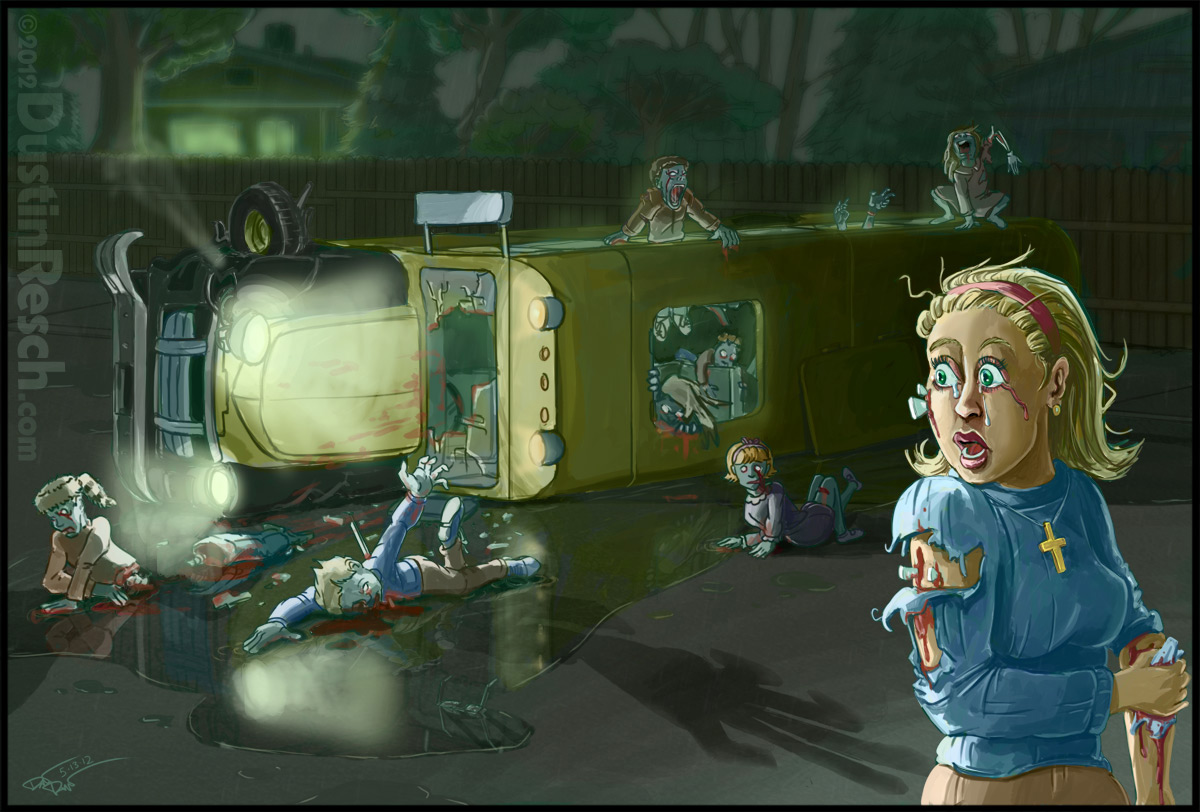
ZOMBIE BUS OMNIBUS


IT'S OVER!  My final assignment for Drawing From Imagination.  We had two choices of "storyline" to use for our final illustration.  Obviously I had no choice whatsoever...


Complete an illustration, 12 inches x 16 inchesor larger, to accompany one of the passages below. Your image must be as realistic as you can make it and very detailed.
Grades will depend on:
  • Narrative.
  • Drama.
  • Imagination.
  • Proportion.
  • Drawing.
  • Value.
  • Accurate perspective.
  • Reflection plotting.
  • Shadow plotting.
It is your responsibility to ensure that your illustration demonstrates ALL you have learned during this course.
The Passages
Your illustration will accompany one of the passages below. The choice of which passage to use is entirely up to you.
1. Snow White and the Seven Dwarfs
Snow White set the seven dwarves to work spring-cleaning their tiny cottage. There was a lot to be done. The dwarves swept the floor, polished the windows, washed the linen, and made the beds. There were seven of everything and everything was half its usual size. Meanwhile Snow White prepared a delicious feast for her seven little hosts.
Later that night, when they had finished supper and every dwarf was round, full, and contented Snow White danced with the seven dwarves to the jolly strains of the fiddle. The little men stood no higher than her waist.
No one noticed the ugly old hag watching them from the window.
2. School Trip
Miss Blake dragged herself out of the twisted school bus, stumbled across the waterlogged street and collapsed. Her thoughts were snarled by the collision. What was that decaying, faltering thing she had swerved to avoid a minute earlier… and where was everyone from the town, and why had no one come out to help?
The rain had finally stopped. She looked around her. The lifeless bodies of her students were scattered about the wreckage like rag dolls: some strewn across the asphalt, some hanging from windows, some hidden inside, but all were broken and still.
Was she the sole survivor? As the town clock struck twelve there was a shifting from inside the bus. She froze - the children! Miss Blake watched in terror as the ruined corpses of thirty eight year olds pulled themselves from the school bus and began to limp hungrily towards her…

Tuesday, May 1, 2012

M'aidez, cry the Masters of Old

Here's more pedantic verbosity about art & stuff.

DISCUSSION #13:
Professor:
A question for this week's discussion: Do you think we are likely ever again to see the level of profound and transcendent quality of painting as embodied by the artists here displayed?

(we were given examples by Vermeer, Van Eyck, and Holbein The Younger)

I look forward to reading your opinions, and answering any questions about the paintings.

Robert

__________________________________________________________

(my response, partially in response to a student who stated "I truly believe that great artists are continually born into this world.  The advent of new technologies have through the years increasingly eroded the motivation of artists to create such splendid photo realism.  The camera was first such invention to rob a great number of artists of the motivation to create realism." - Ben is one of my most thoughtful classmates, a great guy with whom to discuss ideas)

__________________________________________________________

Me:
It's interesting that you chose "photo realism" to describe paintings that existed long before photography.  Or Photoshop, certainly.

I'm sure that it's true, that advances in technology and technique have diluted the mastery available to the world.  There are some transcendent and unbelievable artists at work in this day and age, in many media, but imagine how many more artists there are right now than there were when Holbein and Van Eyck were at the top!  Just mathematically, given how many more humans are alive in the present day, but also thinking of all of the possibilities for artists in the film and publishing industries, and all of the aspiring amateurs out there on the internet - I feel certain that there are Rembrandts being born every day.  Perhaps they will never reach that sort of height though - perhaps all potential is wasted potential in a world where media and distraction and escapism is so readily available.  Think of what went into making a Master, in the Renaissance, or the Dutch Golden Age.  The years, even decades of apprenticeship and journeyman(ship?  ism?), the pigments ground by hand, the sweat and toil and effort.

I want badly to defend my digitalism here, but I can't deny the truth of the idea that it's just not the same as squinting into the sun, turpentine poisoning the blood of my fingers, trying to force the canvas to yield light and form and mass through sheer effort of will.  It's not the same when you can publish your fumblings to thousands of people in seconds, and have dozens of them press "like" and you're instantly validated.   None of us will know what it's like to be denied entrance into L'Academie, or to earn the displeasure of the Pope, or to be beaten with a stick by Roberto da Florczak for mixing the lapis lazuli with the wrong amount of linseed.  I know how hard I've had to work to force art into my head and my hands, being a person born for words and numbers and facts, but I know it's nothing like as hard as becoming one of the Masters of old.  Those guys didn't have online tutorials, or how-to books, or the extra centuries of art to study.  The difficulty makes the mastery, to some degree. 


With all that said (and realizing I should have quit there, to avoid being beaten with a stick), I also want to mention, though, that potential need know no ceiling.  New generations of artists, if they can learn that their position is one of precarious balance upon the shoulders of giants, can build upon the wealth of available knowledge.  They can take inspiration from previous perspiration.  Old things can be combined and dissected into new things.  I don't like to think that we peaked as a species with the Industrial Revolution, or that artists can never, ever make art as important or beautiful as the fine gentlemen of the past again.  It's a different world, to be sure - and most of us will become "masters" for the price of a student loan, without ever paying the price of calloused fingers that came from tearing Art for the first time from the raw firmament of the cosmos.  I get a pretty sore neck from bending over my Wacom tablet, but hardly anyone ever whips me when I forget to let the canvas dry properly before I lay down a new glaze.  I share the nostalgia of the way things were before Digital Man diluted everything, but I wash it away with the hope that a progressing species will find new ways to transcend.

Tuesday, April 24, 2012

Enrichment and Elevation of Society. Whatever.

In my "Drawing from Imagination" class, each week we're assigned a Discussion Topic to show that we really think about art and have critical skills of some kind.  I tend to have a lot of fun with these, and I'm just obnoxious enough to want to share.

______________________________________________

DISCUSSION TOPIC #12:

Professor:

Would you say it is more important for artists to produce their work for the enrichment and elevation society, even if remaining anonymous, or that society has a duty to recognize artists and acknowledge their personal "statements"?

Please no "both are important" answers!

______________________________________________

Dustin Resch:

Both are important!  Oh, wait...

As a working artist, it's hard to deny the importance of recognition.  Commercial viability depends on marketability; marketability depends on recognition.  We can't eat if we don't get noticed.  We don't feel loved if we don't get attention.  We can't go home on Thanksgiving and make our parents proud if we don't get a few hundred Facebook Likes on a new illustration.  But these are selfish desires, even the ones about eating and paying rent.  It's not a duty of society to notice us - society owing anything to artists isn't part of the unspoken contract.  If we want to get noticed, we need to make art that pleases people - or shocks or surprises people - or entertains them, or turns them on, or offends them.  That part is our responsibility, not theirs.  We're the ones that have to hire agents, or pound the pavement, or send out endless portfolios.  It's the same for fine artists as for commercial artists, though their ambitions may be more lofty than ours - they're still holding up a mirror to society, and begging society to look in that mirror.  If society walks by without making eye contact, that's not failure to meet an obligation.  That's just the mechanics of attention.

Taking a wider perspective, as a human and a cog in the machinery of history, it's more important that I make some kind of contribution to society.  Even an empty, fluffy contribution, entertainment for entertainment's sake - I've made a few kids smile, or a few puritans blush. I don't take an altruistic responsibility to "change the world for the better" necessarily, although I hope I push a few molecules of air in a positive direction, in the balance of things.  The groundbreaking pioneers that painted the animals at Lascaux... they made it possible to be what we are, and we'll never know their names, if they even had names.  I love that there are academics working hard to know more about them, but their contributions have long outlived the individuals that wielded the brushes.  Van Gogh contributed far more to the understanding of light and the techniques of emotion than he ever received recognition for in his lifetime, and that's sad for him - but to the benefit of humanity nonetheless.

Enrichment and elevation of society.  Those words are awfully noble, and I don't know how to be certain if I'm even pointing in the right direction.  For centuries, the only enrichment or elevation art was allowed to aspire to was dictated by the Church.  Michaelangelo and Fra Filippo definitely enriched society with the art they created, but whether or not there was elevation depends on how you feel about the underlying faith and philosophy.  I think that the great artists of history (and the mediocre and unknown ones too) always hoped to enrich and elevate mankind in some way, although one suspects that they often also craved recognition and fame - or at least the avoidance of excommunication or execution.

For myself, I will be satisfied if my art lifts the moods of some people, inspires some other artists, provokes some thought, and maybe continues to do those things after I'm gone.  But if it sells some books, wins some awards, makes some house payments, and gets me a few hundred Facebook Likes, that's okay with me too.

Saturday, April 7, 2012

Author Guy Christopher Moore

Went to a book signing for Christopher Moore's new objet d' literature, Sacre Bleu.  I have been working on a portrait of him, which was well-received.  It was a dignified affair, with high-minded discourse about art, and religion, and old ladies with green beans getting banged on a cafeteria table.


Saturday, March 17, 2012

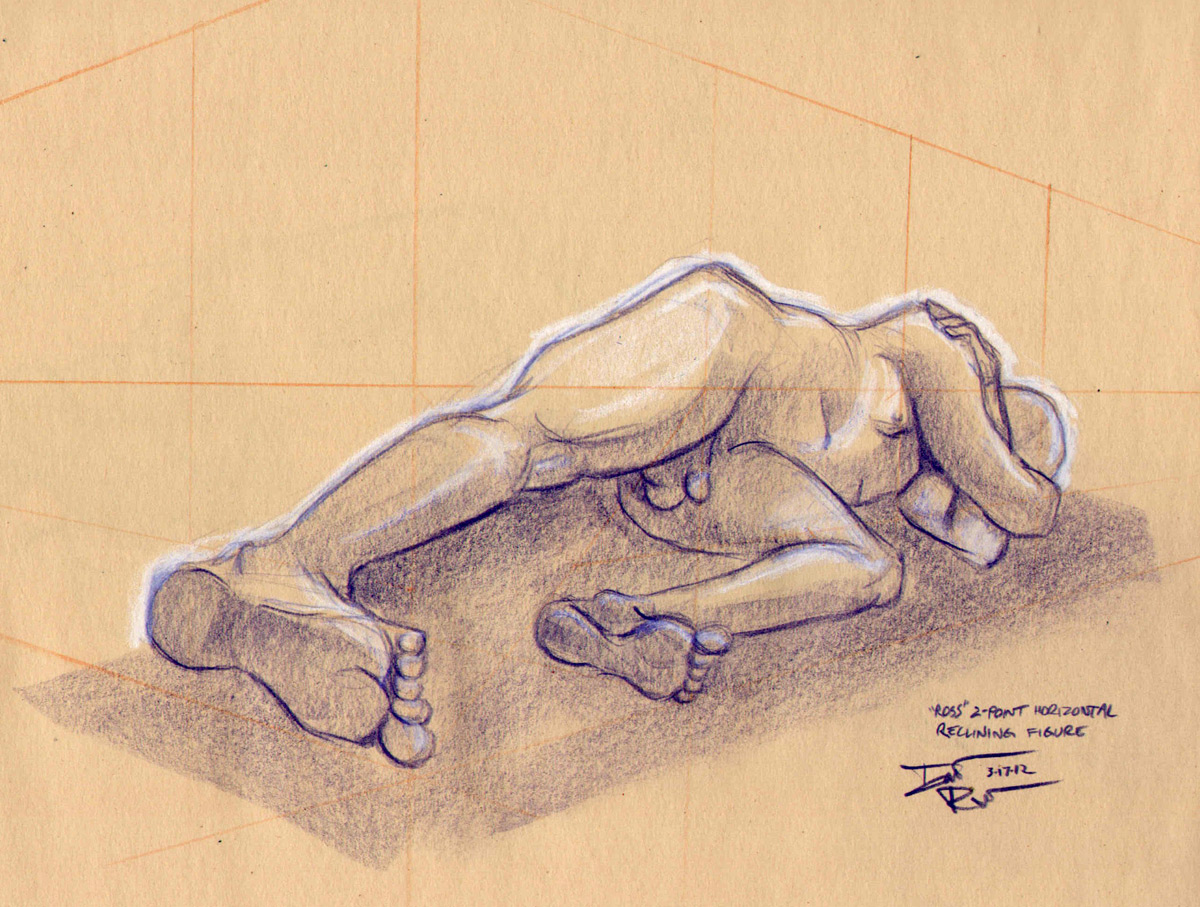
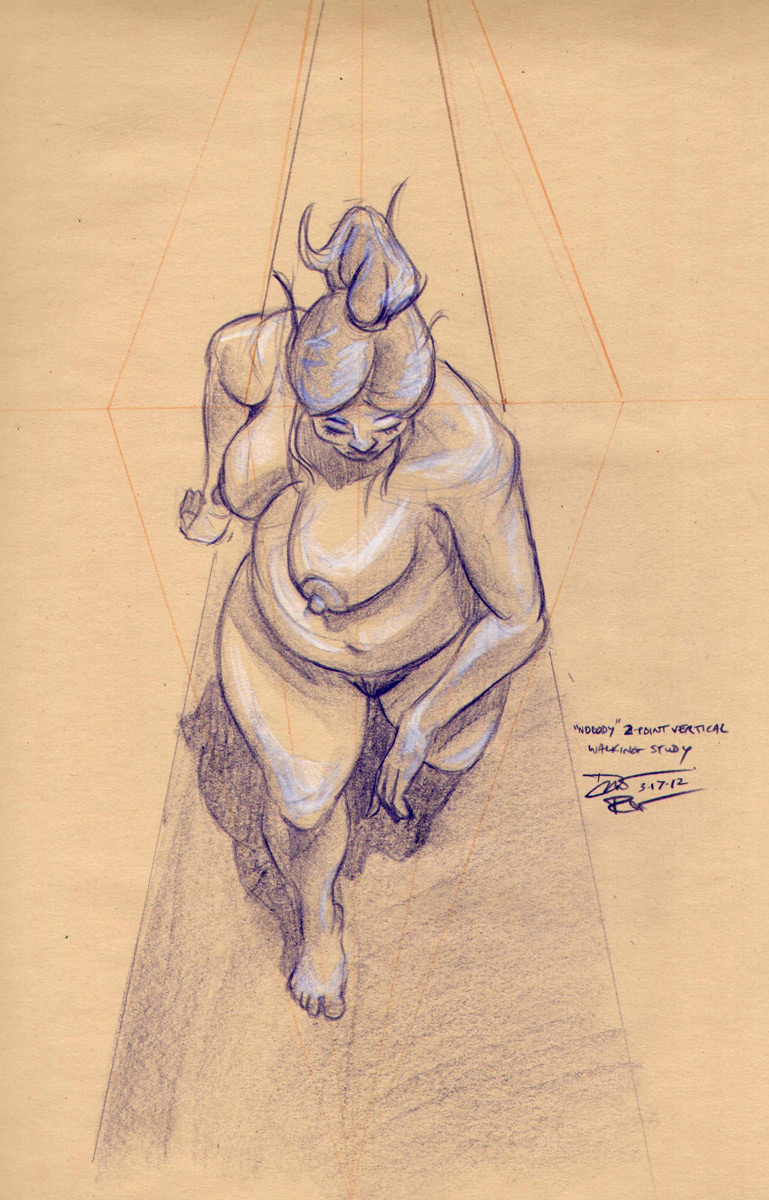
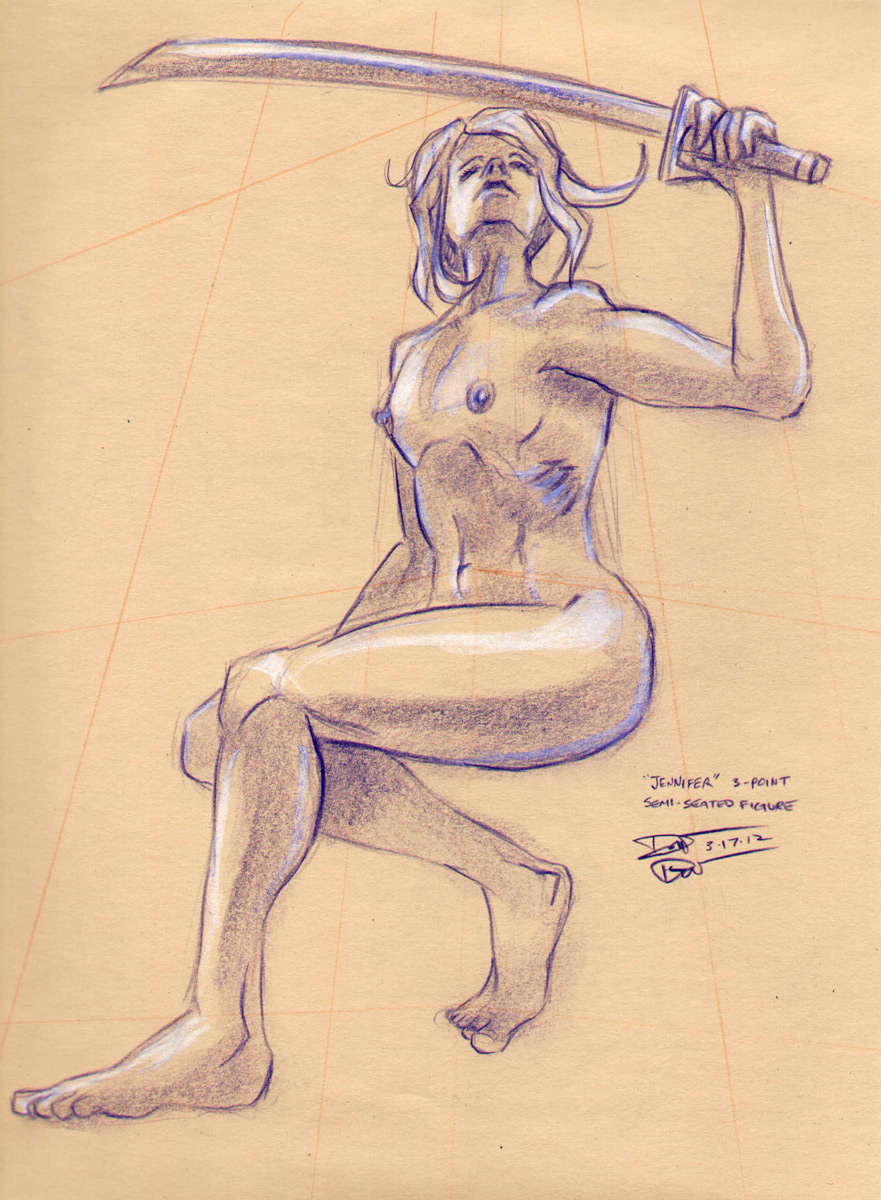
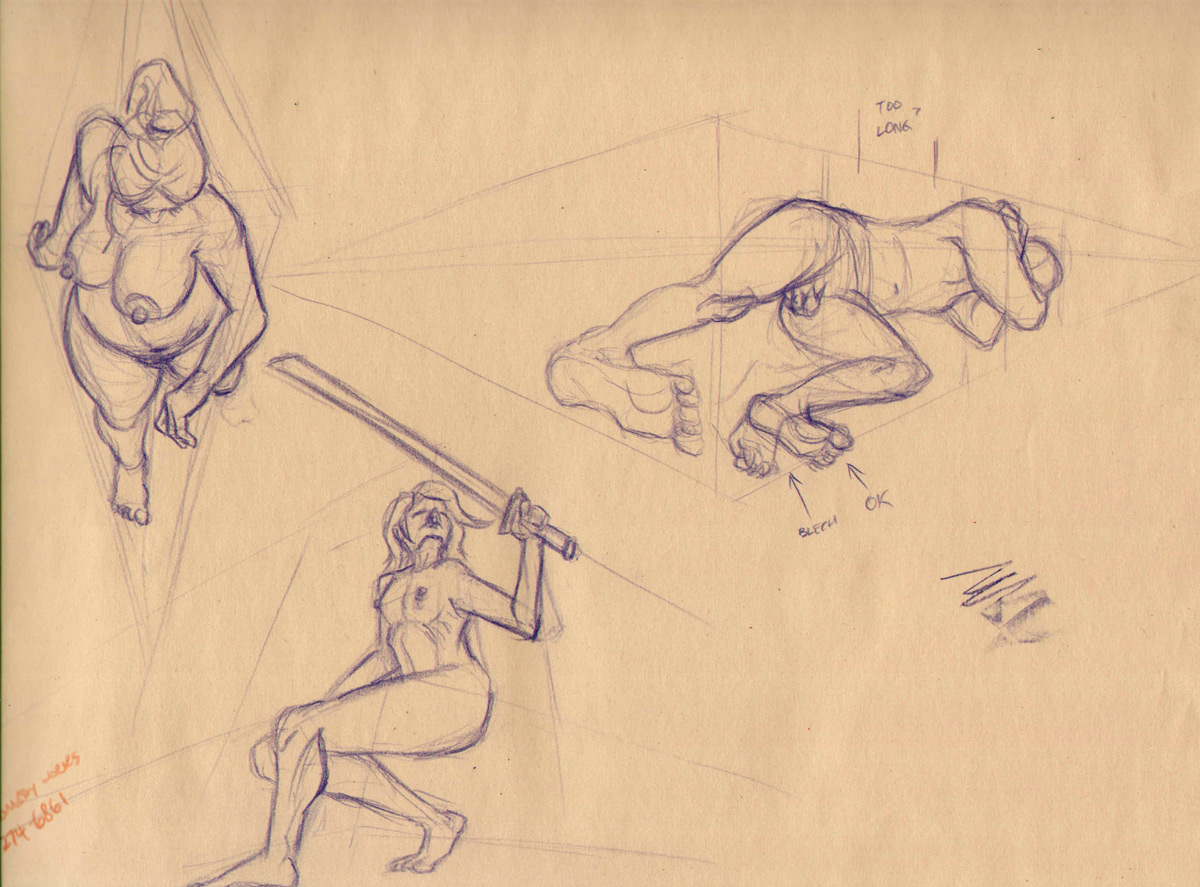
Grad School: Human Bodies In Perspective

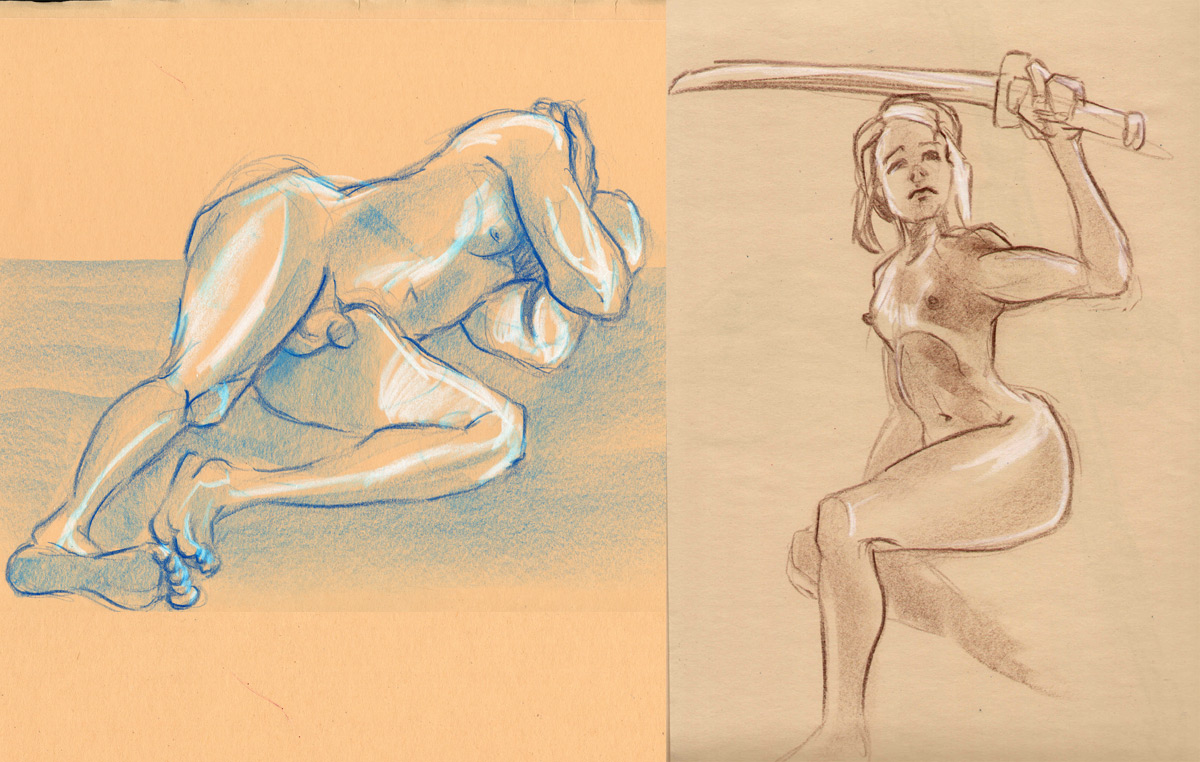
This week's assignment is to plot human bodies in correct perspective.  I was lucky enough to have a lot of recent life drawings in my sketchbook to use as reference for some of them - it's pretty great to get some additional use out of drawings like that.  

See below for the drawings, and at the very bottom are the original sketches done from live models that were the basis for some of these others.

Sunday, March 11, 2012

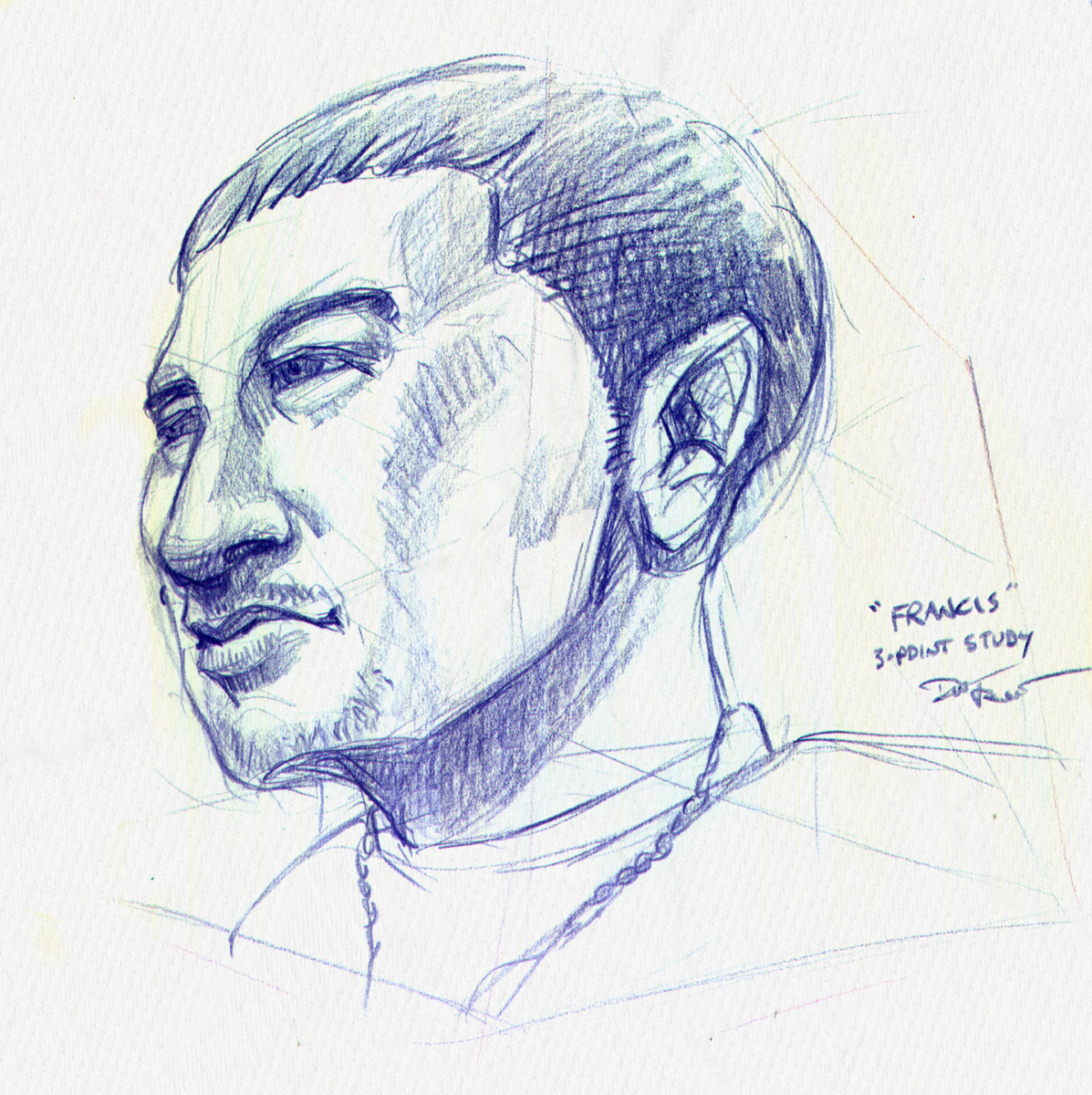
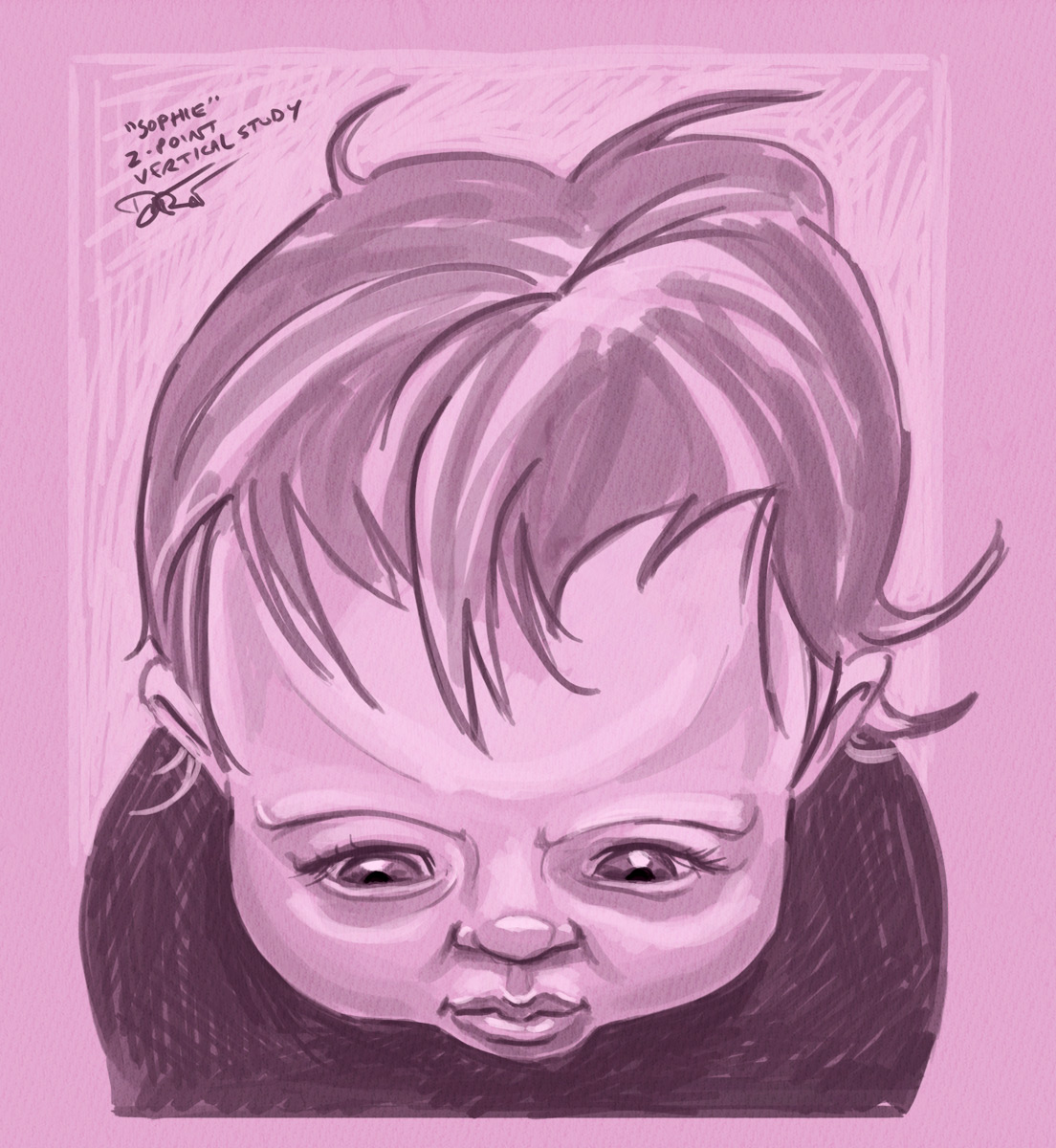
Grad School Heads in Perspective

This week, had to take some assigned "regular people" straight-on headshots, and translate them into various perspective schemes to draw them at a new angle. Yikes!

Grad School Perspective Assignments - Weeks 1-6

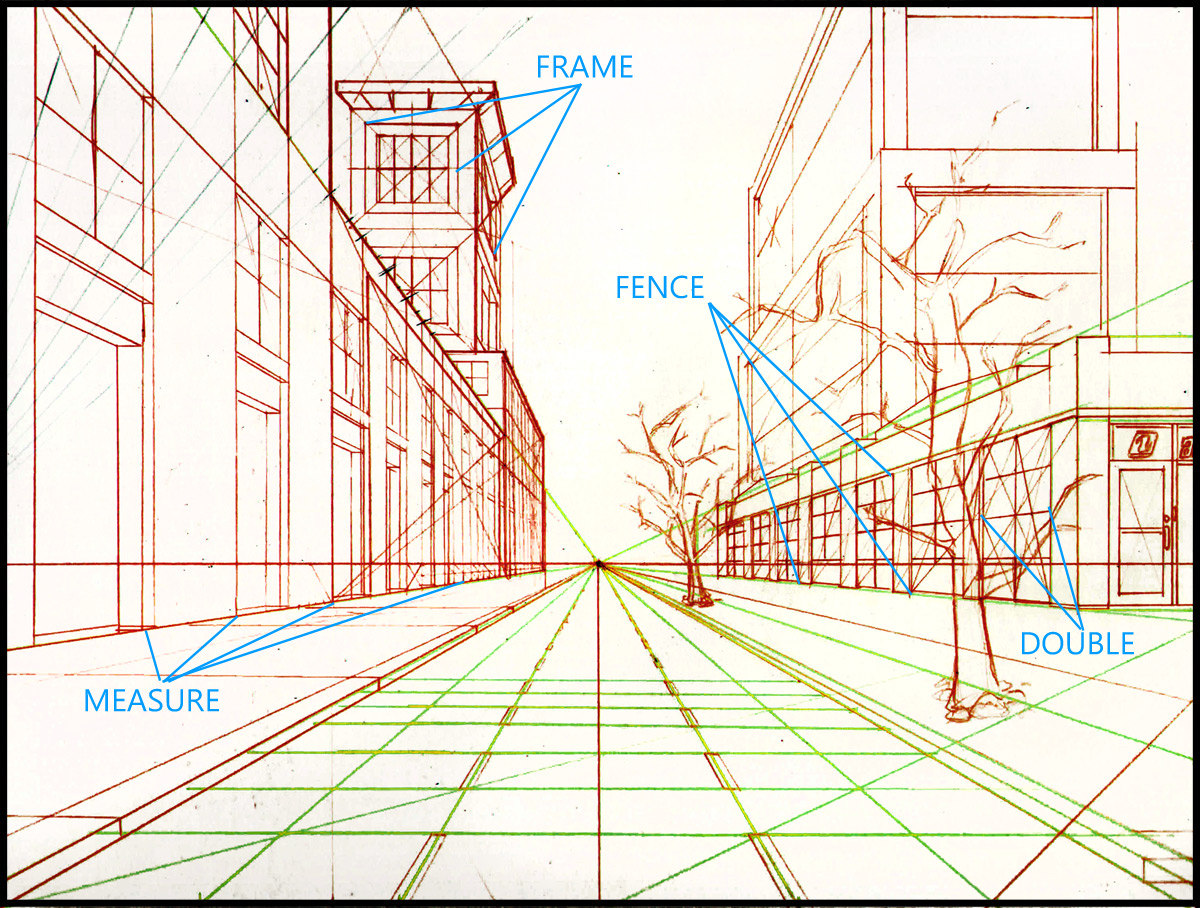
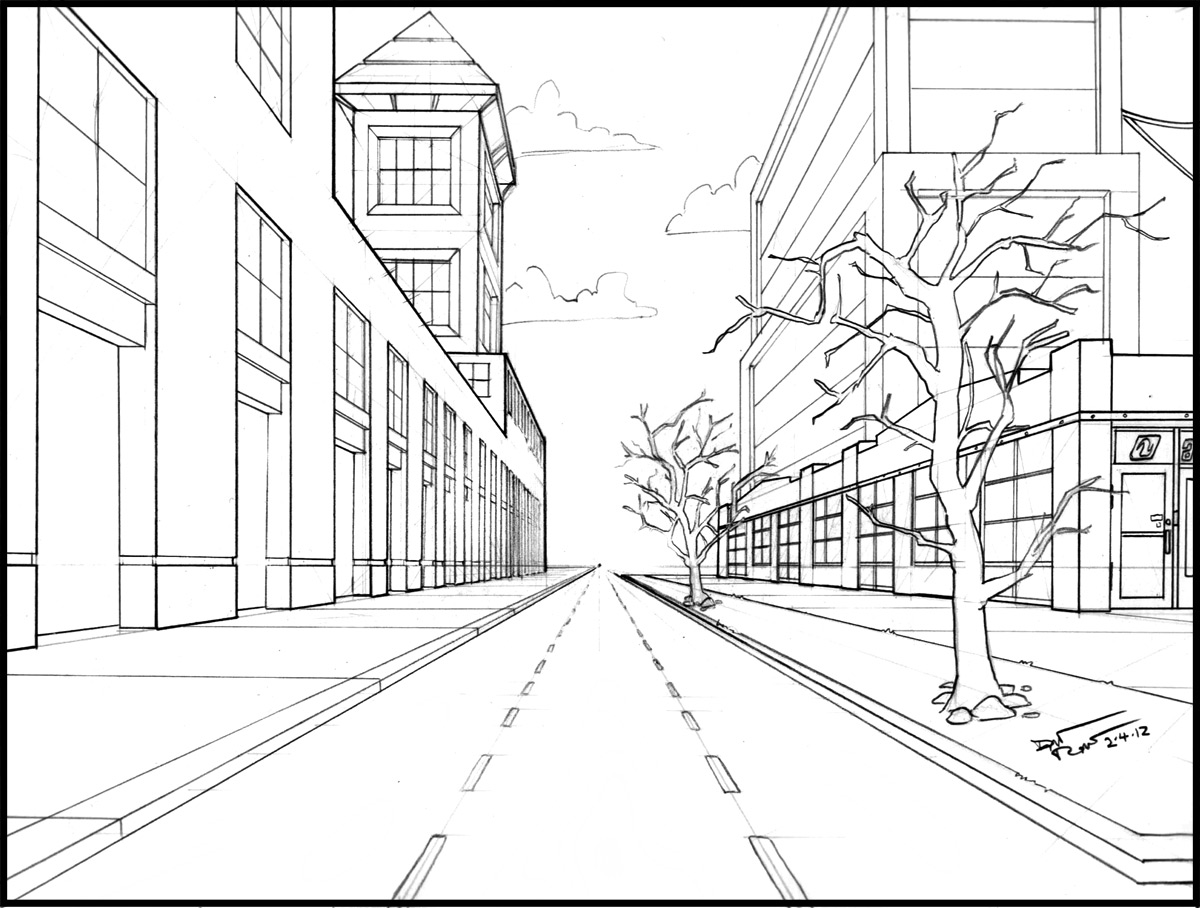
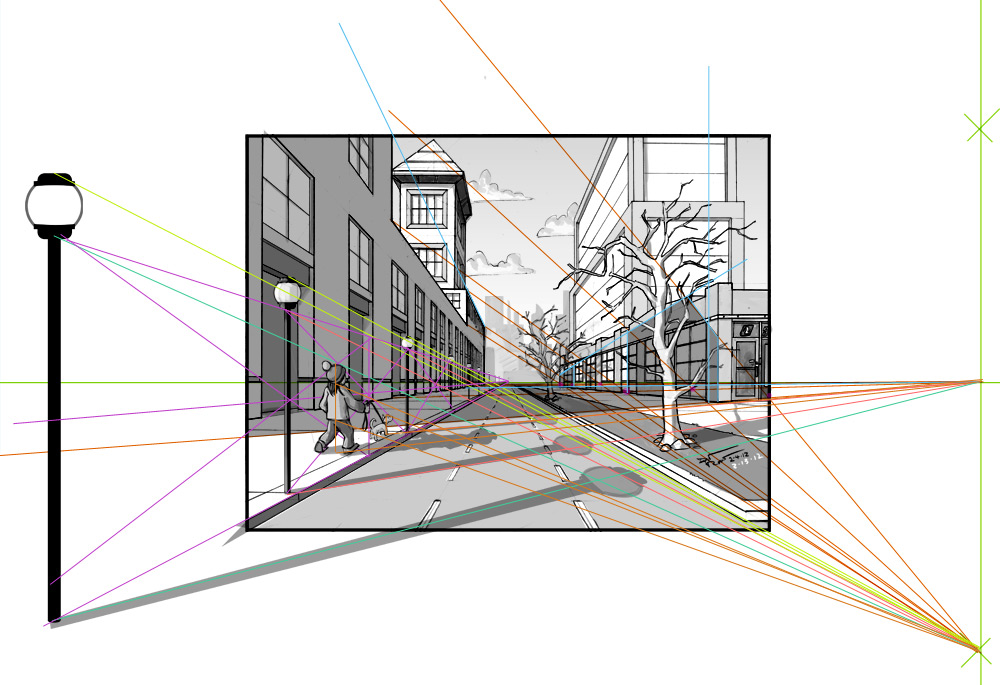
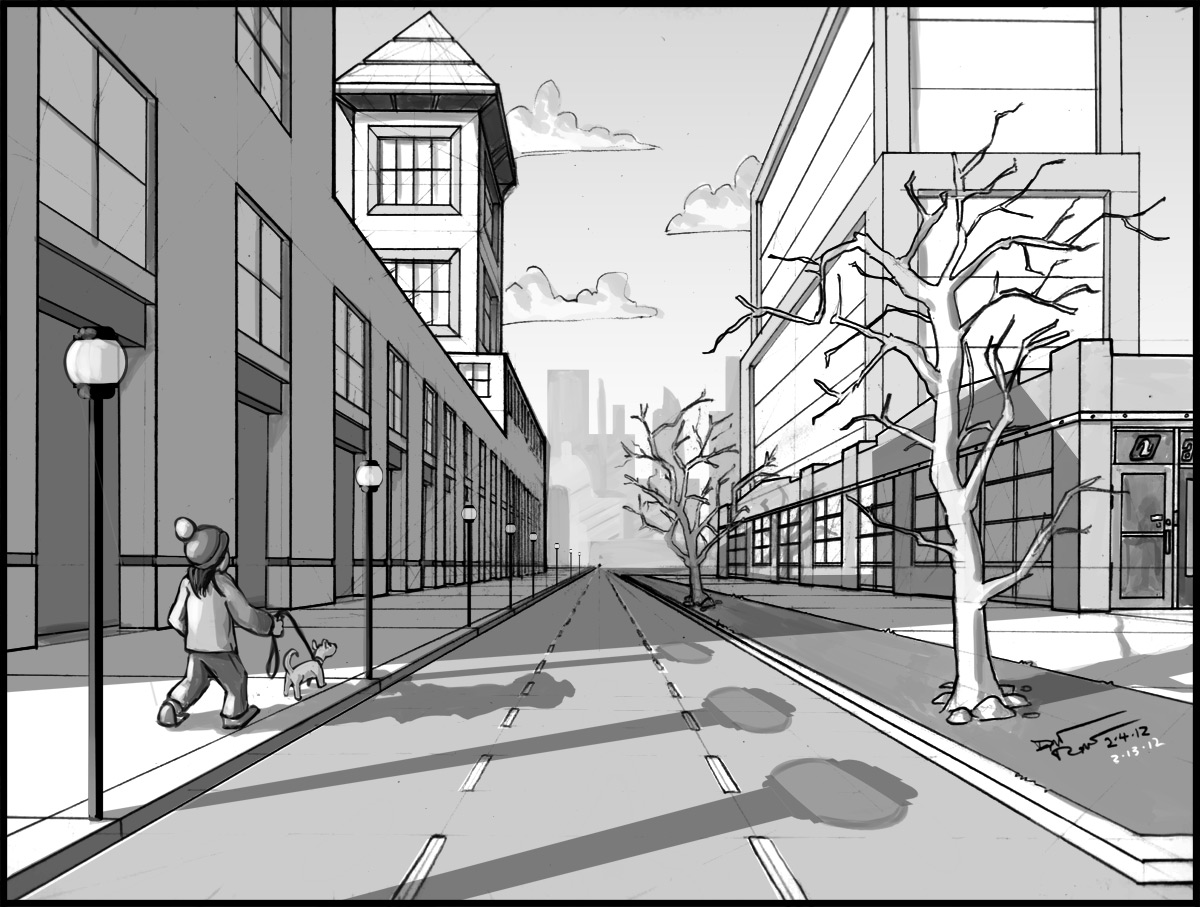
Here are a bunch of the projects I've had to put together so far for my first MFA course, "Drawing From Imagination". A lot of perspective, lighting and shadow to help us learn to make an imaginary space behave realistically to the eye.

Week 1: One Point Perspective, Street Scene


Week 2: One Point Perspective, Value and Shadow


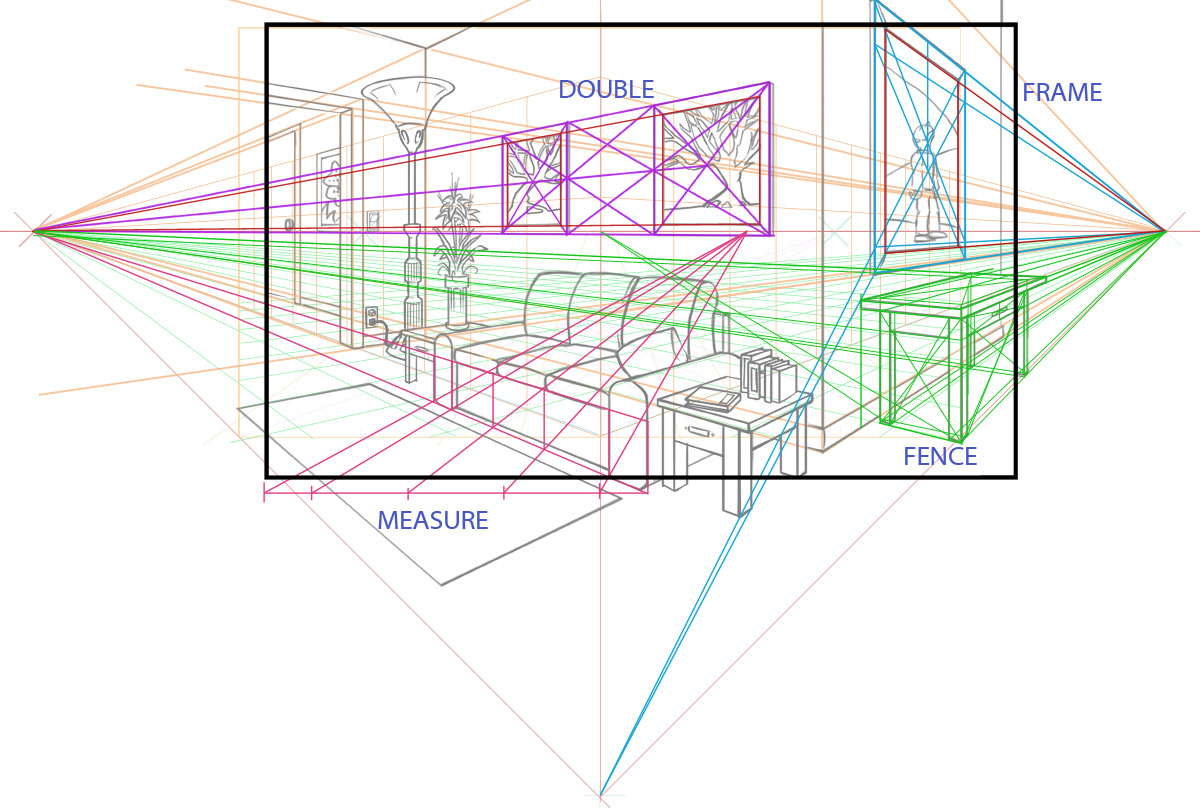
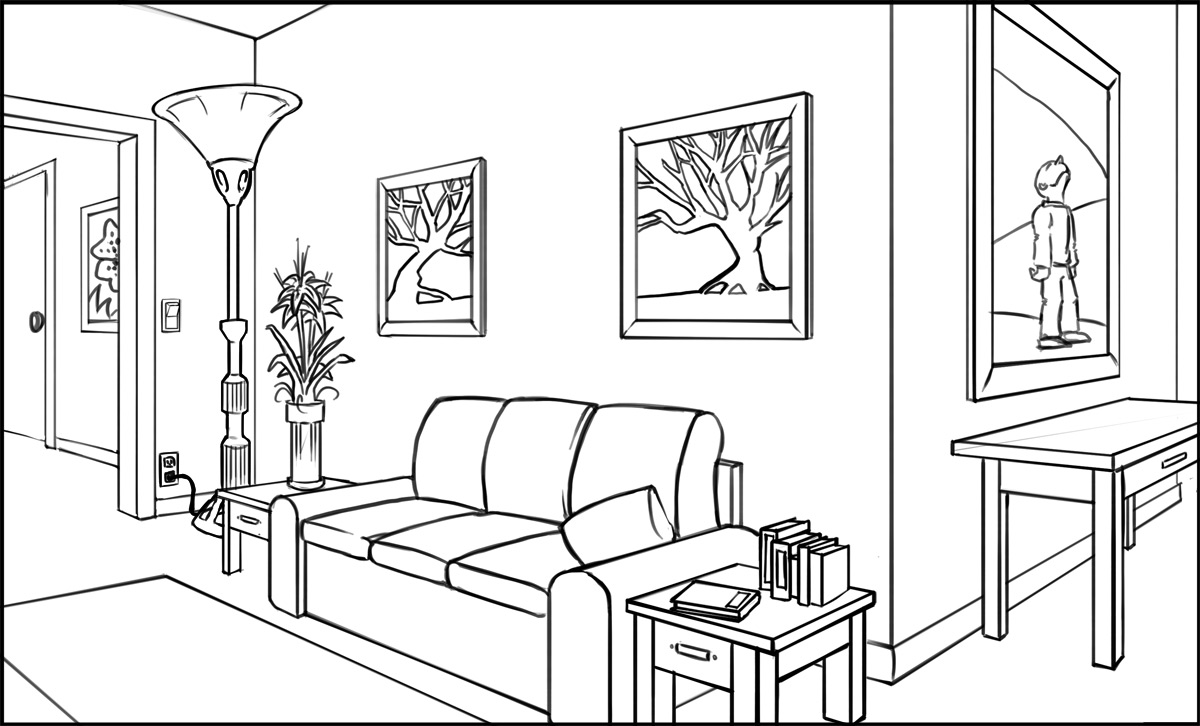
Week 3: Two Point Perspective, Interior Scene


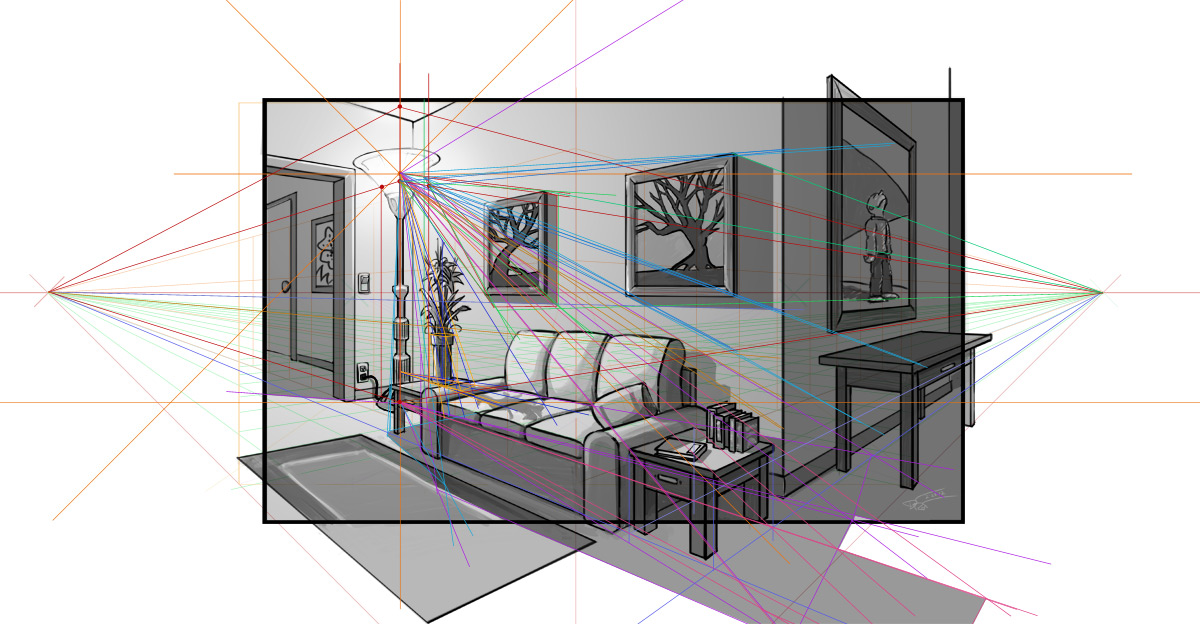
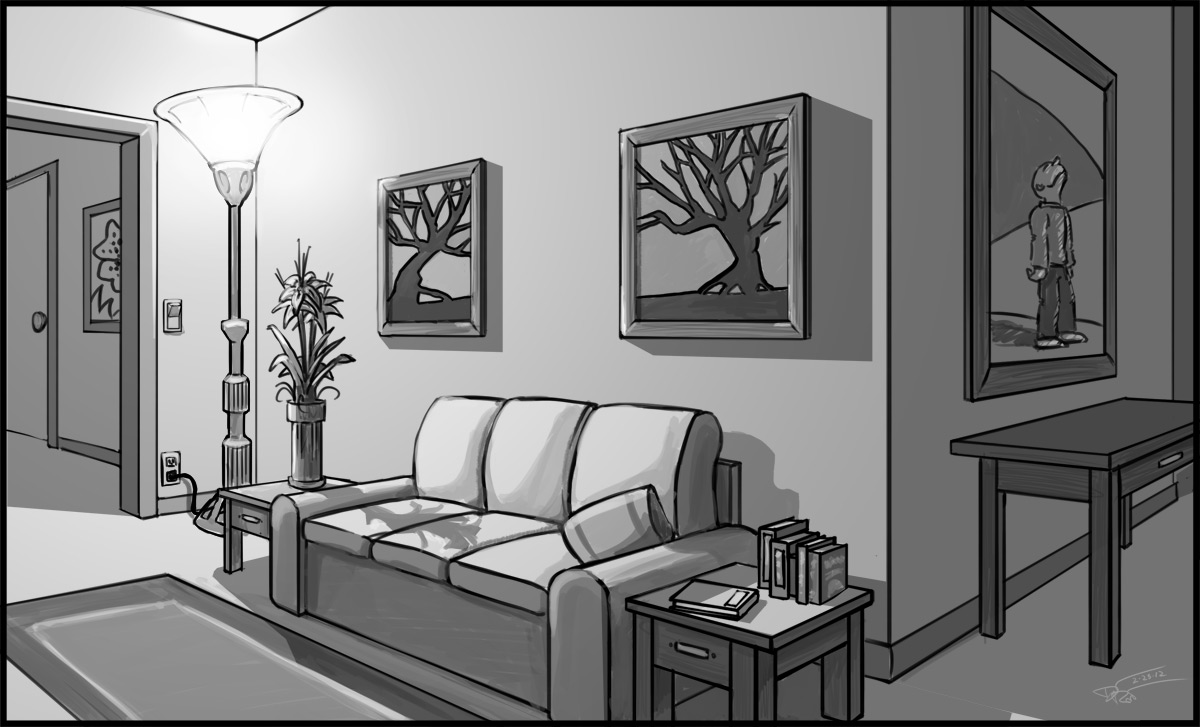
Week 4: Two Point Perspective, Artificial Light and Shadow


Week 5: Three Point Perspective with Two-Point Vertical Perspective Objects